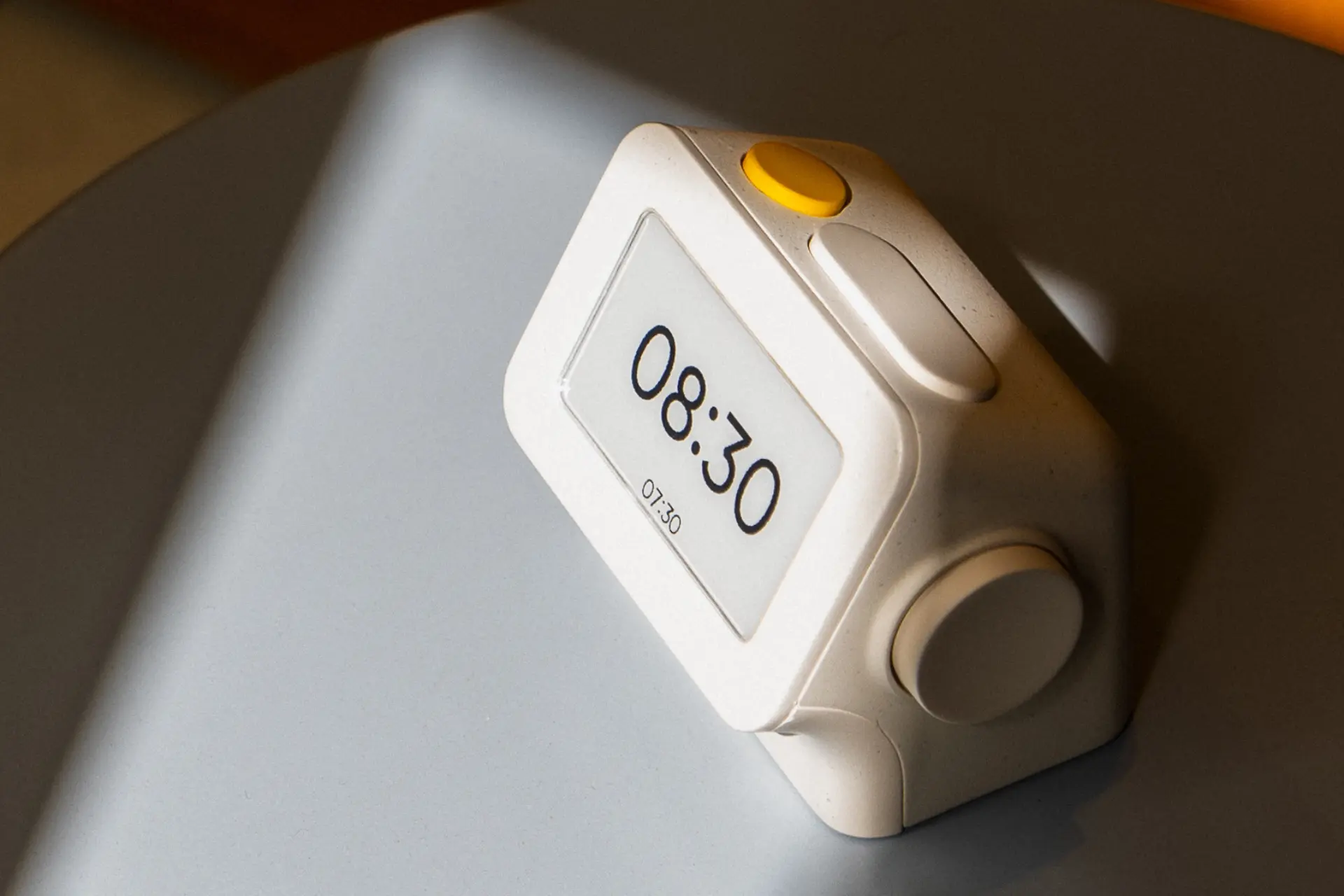

Habity Bedside Clock
Phone-free mornings that don't start with doomscrolling. This bedside clock replaces your smartphone with gentle wake-ups and actual sleep without notifications. $157.
TL;DR:
- Habity Bedside Clock is designed specifically to stop late-night scrolling by replacing your phone as your bedside companion.
- Features customizable wake schedules with calming tones, soft sunrise light, and a wide selection of sleep sounds (no Wi-Fi required).
- Purpose-built to help you ditch your phone from the bedroom, building healthier sleep hygiene from the moment you use it.
It's 11 PM. You told yourself you'd be asleep by 10:30. Instead, you're lying in bed, phone glowing in the darkness, scrolling through social media for "just five more minutes" that turns into an hour. Your eyes burn. Your brain is wired. You know you should put the phone down, but the algorithm keeps feeding you content specifically designed to keep you engaged. By the time you finally sleep, it's past midnight. The alarm goes off at 6:30 AM. You're exhausted, so you reach for your phone to snooze, which immediately sucks you back into email, notifications, and the news cycle before you've even gotten out of bed.
Here's the brutal reality: your phone is stealing your nights and shaping your mornings. The blue light suppresses melatonin production, making it harder to fall asleep. The dopamine hits from scrolling create addictive feedback loops your brain can't resist. The anxiety from late-night news and social comparison elevates cortisol when you should be winding down. Then morning arrives, and instead of easing into your day, you're immediately reactive, checking what you missed while unconscious. Sleep quality suffers. Mental health deteriorates. The pattern repeats nightly because your phone is the last thing you see before sleep and the first thing you reach for upon waking.
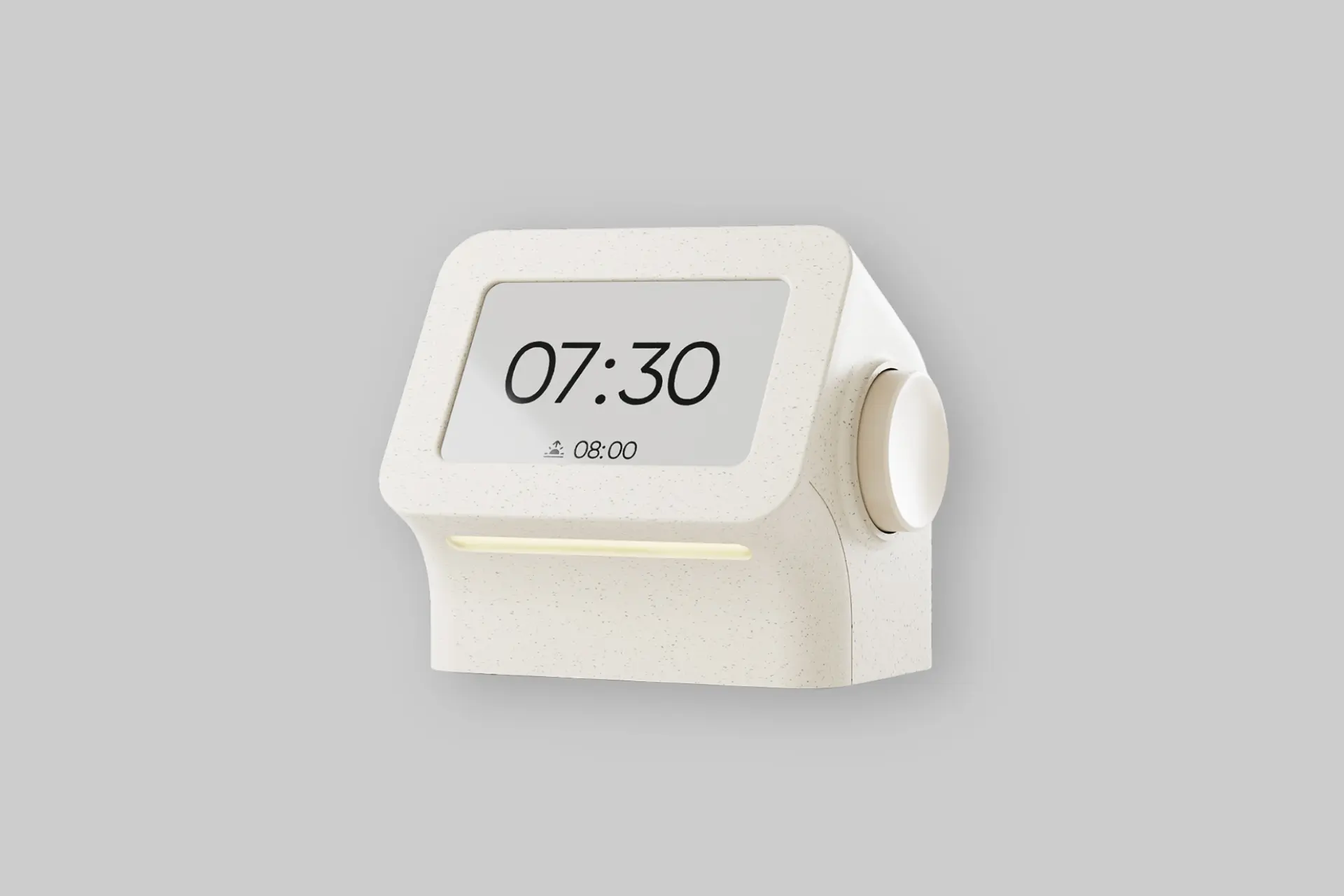
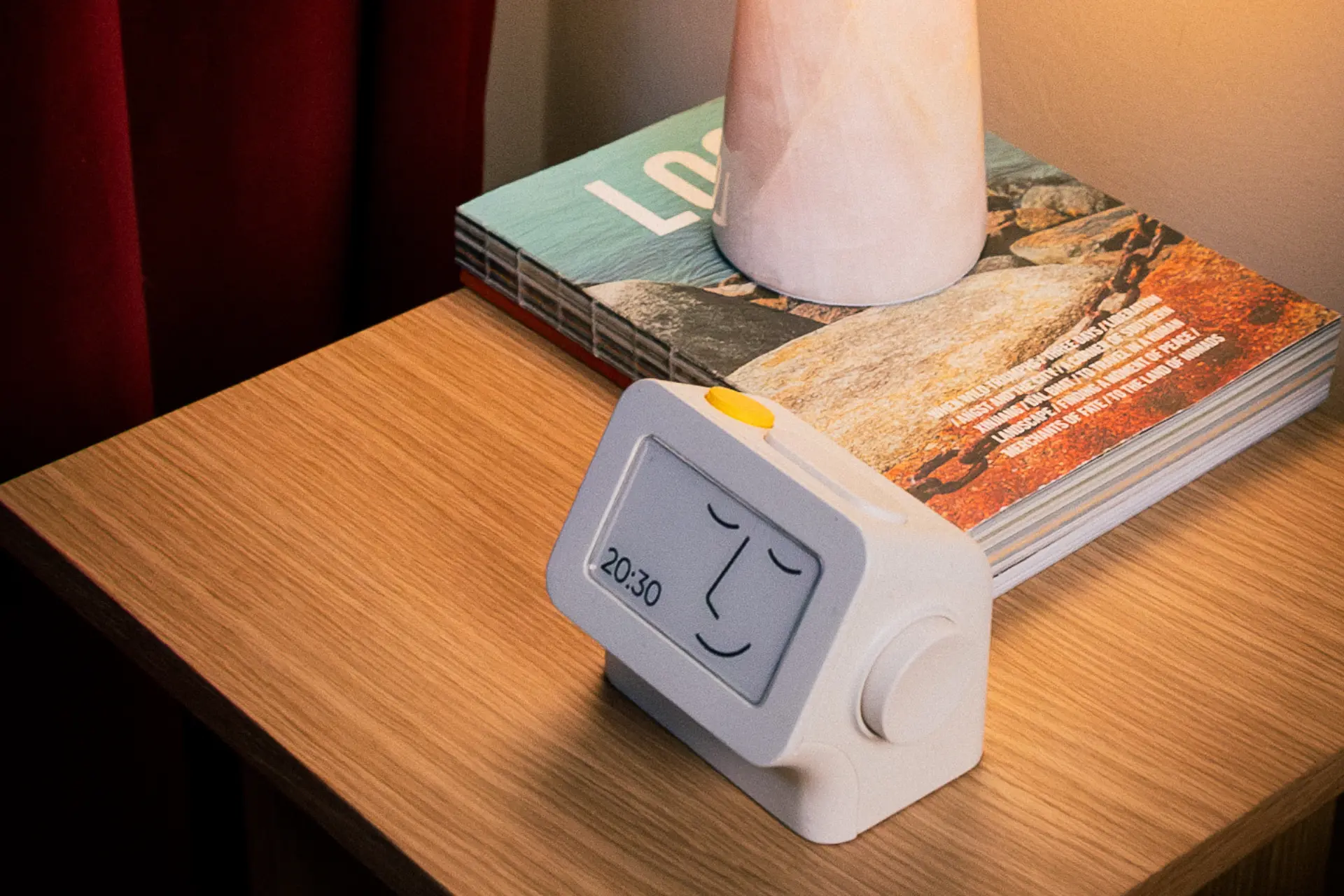
Habity Bedside Clock was designed specifically to break this cycle by physically replacing your phone as your bedside companion. Customizable wake schedules with calming tones and soft sunrise light for gentle mornings. A wide selection of sleep sounds (nature, city ambience, animals, noise patterns) available on demand with no Wi-Fi required. Purpose-built to help you ditch your phone from the bedroom and build healthier sleep hygiene from the moment you use it. In this review, we'll break down whether Habity actually delivers a phone-free bedroom experience that improves sleep, or if it's just another gadget that ends up collecting dust while your phone remains on the nightstand.
What Is Habity Bedside Clock?
Habity Bedside Clock is a dedicated bedside device created by a company whose mission is helping people "reclaim your time, form healthier habits, and stay grounded in a fast-paced digital world." This positioning is critical because it frames the clock not as a tech gadget but as an intervention tool for phone addiction specifically in the bedroom context.
The core function is replacing your phone at night by providing the essential services people claim they need their phones for (alarm, time-checking, sleep sounds) without the infinite distractions (social media, email, news, endless apps). This addresses the rationalization trap: "I need my phone for the alarm" becomes an excuse that enables late-night scrolling and morning reactivity. Habity removes the excuse by offering legitimate alarm and sound functionality in a device that can't suck you into TikTok at 2 AM.
The customizable wake schedules with calming tones and soft sunrise light create gentle mornings that contrast sharply with jarring phone alarms or the anxiety of waking to notifications. Traditional alarm clocks shock you awake; Habity uses gradual light and soothing sounds to work with your natural wake cycle rather than against it. This matters for people whose mornings set the tone for entire days; waking stressed versus waking calm fundamentally changes your day's trajectory.
The sleep sounds library (nature sounds, city ambience, animal sounds, noise patterns) available on demand without Wi-Fi requirement addresses the common objection: "I need my phone for white noise or sleep sounds." Habity provides these features locally, meaning you're not streaming content (which requires internet and keeps your phone active) or depending on apps that might show notifications when you open them to start sleep sounds.
The "no Wi-Fi required" emphasis reflects understanding that internet connectivity in the bedroom creates temptation and vulnerability. Even if you're disciplined enough to only use sleep sounds, having a connected device near your bed means you might "just check one thing" which spirals into full engagement. Habity's offline functionality removes this vector of distraction entirely.
Ingredients, Features, and Quality
Habity Bedside Clock's feature set reflects deliberate design choices prioritizing sleep hygiene over feature bloat. The customizable wake schedules allow setting different alarms for different days without requiring app interaction or touchscreen navigation. Physical controls (likely buttons or dials based on bedside clock conventions) enable setting alarms in the dark without staring at bright screens, preserving melatonin production during nighttime adjustments.
The calming tones for wake-up replace traditional alarm clock beeping or buzzing that triggers stress responses. Waking to gentle sounds (chimes, nature sounds, gradually building music) activates the parasympathetic nervous system rather than the sympathetic fight-or-flight response. This physiological difference affects cortisol levels, heart rate, and mental state throughout the morning, influencing productivity and mood for hours after waking.
The soft sunrise light feature mimics natural dawn, gradually brightening the room before the alarm sounds. This works with circadian biology: light exposure signals the suprachiasmatic nucleus (your brain's master clock) to suppress melatonin and increase cortisol naturally, creating organic wakefulness rather than forcing alertness through jarring stimuli. For people in climates with late sunrises or darkened bedrooms, this artificial sunrise prevents the grogginess associated with waking in darkness.
The sleep sounds selection (nature sounds, city ambience, animal sounds, noise patterns) provides variety for different preferences and situations. Nature sounds (rain, ocean waves, forest ambience) mask environmental noise while creating calming auditory environments. City ambience (distant traffic, café sounds) offers familiarity for urban dwellers who find complete silence unsettling. Animal sounds (crickets, birds) provide natural rhythms. Noise patterns (white, pink, brown noise) mask specific frequency ranges for sound sensitivity.
The local storage of sleep sounds (no streaming required) means consistent availability regardless of internet connectivity, no data usage, no buffering interruptions, and no subscription fees. Many sleep sound apps require premium subscriptions or insert ads; Habity's one-time purchase includes permanent access to its full library. This also means no software updates that might break functionality or introduce unwanted features.
The no Wi-Fi requirement for core functionality protects against several failure modes: internet outages don't disable your alarm, Wi-Fi radiation concerns are eliminated (some people are sensitive to electromagnetic fields), and there's no connectivity vector for hacking or data collection. Optional Wi-Fi connectivity might enable features like automatic time updates or software upgrades, but the core alarm and sound functions work completely offline.
The focus on helping you "ditch your phone from the bedroom" represents the product's philosophical core. Habity isn't trying to be a better smart device; it's trying to be good enough to eliminate smart device dependency in the bedroom. This "good enough" threshold is actually quite high (reliable alarm, quality sounds, pleasant wake experience) but deliberately stops short of features that would recreate phone-like engagement (notifications, apps, web browsing).
Pros and Cons of Habity Bedside Clock
- ✅ Pro: Designed specifically to replace phone as bedside companion, addressing root cause of late-night scrolling
- ✅ Pro: Customizable wake schedules with calming tones for gentle, stress-free mornings
- ✅ Pro: Soft sunrise light works with circadian biology for natural waking
- ✅ Pro: Wide selection of sleep sounds (nature, city, animals, noise patterns) available on demand
- ✅ Pro: No Wi-Fi required for core functionality; sleep sounds stored locally
- ✅ Pro: One-time purchase with no subscriptions or recurring fees for sleep sound access
- ✅ Pro: Physical controls enable use without bright screens that suppress melatonin
- ✅ Pro: Purpose-built for sleep hygiene rather than trying to be multifunctional smart device
- 🟡 Con: Single-purpose device requires shelf space and electrical outlet dedicated to bedroom clock
- 🟡 Con: Upfront cost higher than basic alarm clocks (though comparable to quality sleep sound machines)
- 🟡 Con: Requires behavior change commitment; won't work if phone remains on nightstand "just in case"
- 🟡 Con: Limited feature set compared to smartphones (which is the point, but may feel restrictive initially)
Who Should Choose Habity Bedside Clock?
Habity Bedside Clock is designed for people who recognize their phone is destroying their sleep but haven't been able to break the pattern through willpower alone. It's especially well-suited for:
- Chronic late-night scrollers: Those who consistently stay up past intended bedtime because they can't stop scrolling social media or reading news.
- Morning phone addicts: People whose first action upon waking is checking notifications, email, or social media before even getting out of bed.
- Sleep quality seekers: Anyone experiencing poor sleep, difficulty falling asleep, or unrefreshing mornings who suspects phone use is contributing.
- Digital wellbeing advocates: Those actively trying to reduce screen time and create healthier boundaries with technology.
- Parents modeling behavior: Adults who want to demonstrate healthy phone habits to children by keeping devices out of the bedroom.
- Anxiety and stress managers: People whose late-night phone use increases anxiety through news consumption or social comparison.
- Sleep hygiene improvers: Anyone building better bedtime routines and recognizing phone removal as essential component.
Final Verdict: Is Habity Bedside Clock Worth It?
Habity Bedside Clock succeeds by doing one thing exceptionally well: replacing your phone as your bedside companion. The customizable wake schedules with calming tones, soft sunrise light, and wide selection of locally-stored sleep sounds provide the legitimate functionality people claim they need their phones for (alarm, sounds) without the infinite distractions that destroy sleep quality and mental health. The no Wi-Fi requirement for core features eliminates connectivity-based temptation and ensures reliability regardless of internet status.
The mission of helping people "reclaim your time, form healthier habits, and stay grounded in a fast-paced digital world" isn't just marketing copy; it's reflected in deliberate design choices that prioritize sleep hygiene over feature proliferation. Yes, this is a single-purpose device that costs more than a basic alarm clock. But when you're addressing phone addiction that's stealing your nights and shaping your mornings, the value isn't in feature count; it's in behavioral intervention that actually works. For 2026, if you're serious about ditching your phone from the bedroom and building healthier sleep hygiene, Habity delivers the purpose-built tool that makes the transition possible. Your sleep, your mornings, and your mental health deserve better than screen time; give them quality time instead.