TL;DR
- The POP 4 combines blue laser and infrared structured light with VCSEL technology across five scanning modes, capturing at up to 105 fps and 5 million points per second with a volumetric accuracy of 0.03mm plus 0.05mm per meter of scanning distance.
- It outputs both standard 3D mesh and vivid 1:1 Gaussian 3D Splat models, scans wirelessly for up to 4 hours, connects directly to Android and iOS, and handles surfaces that defeat single-technology scanners without scanning spray.
- MSRP is $919, with Kickstarter early bird pricing from $579. Global shipping to backers is scheduled for July 2026. This is Revopoint's 9th Kickstarter campaign and 21st major product launch.
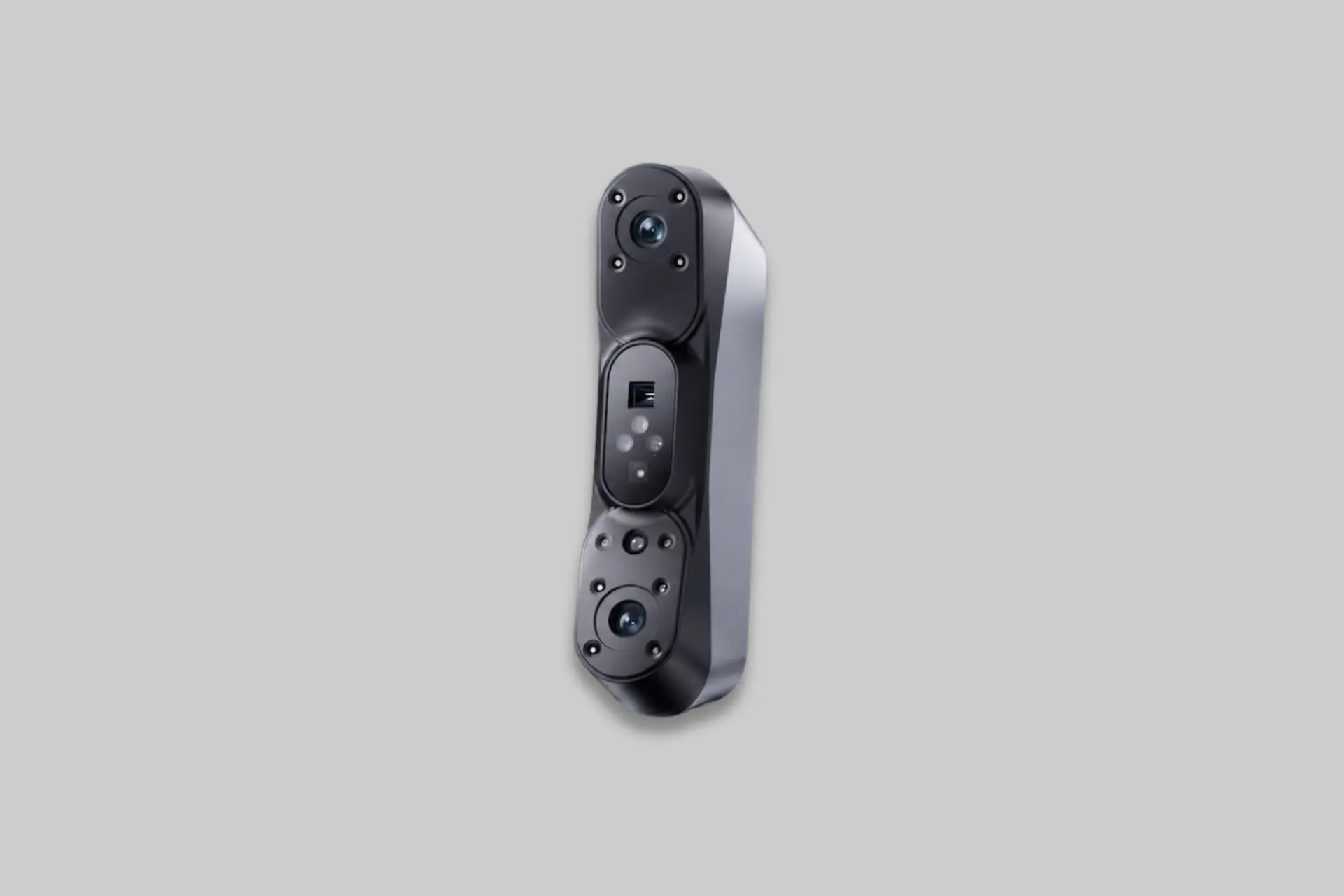
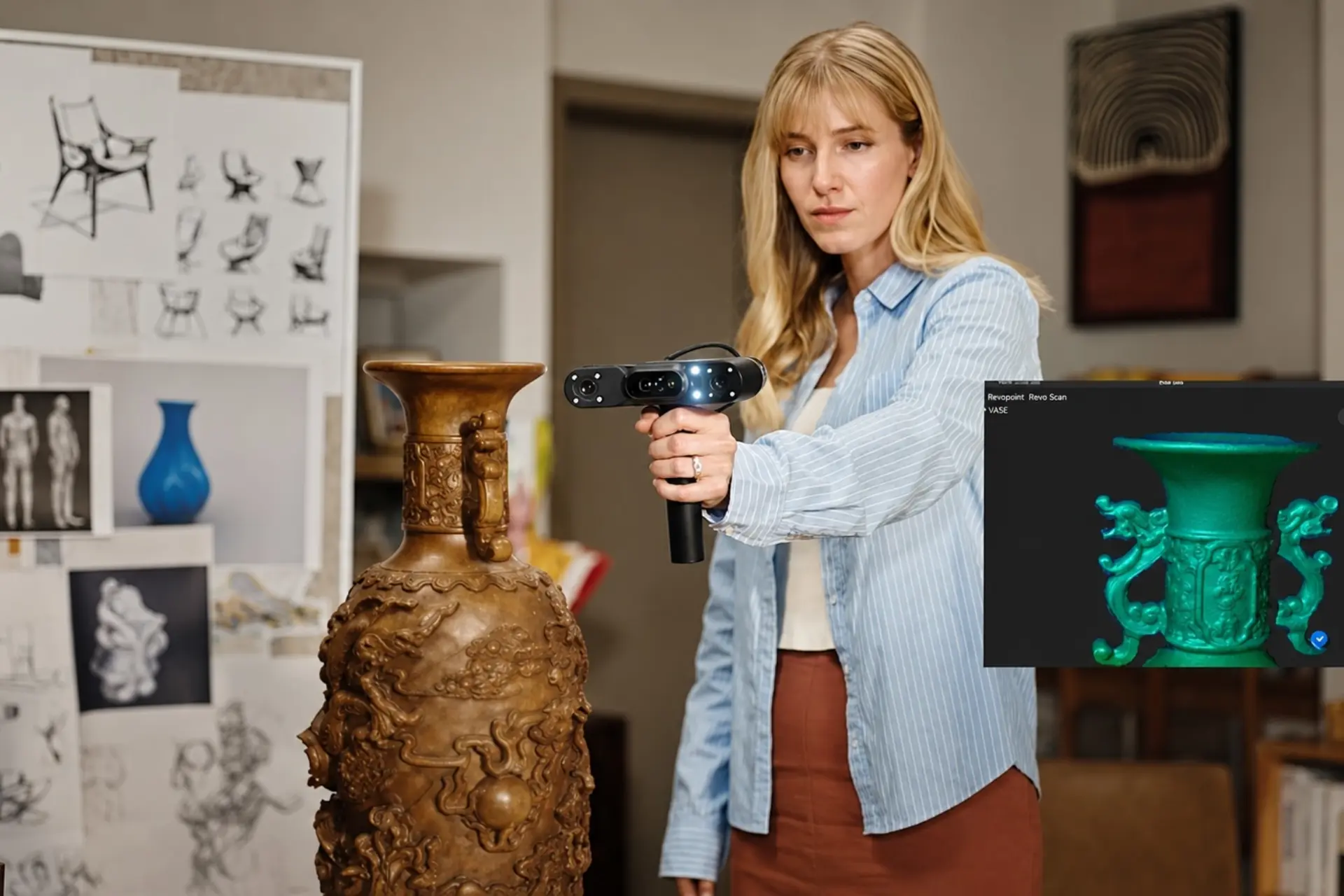
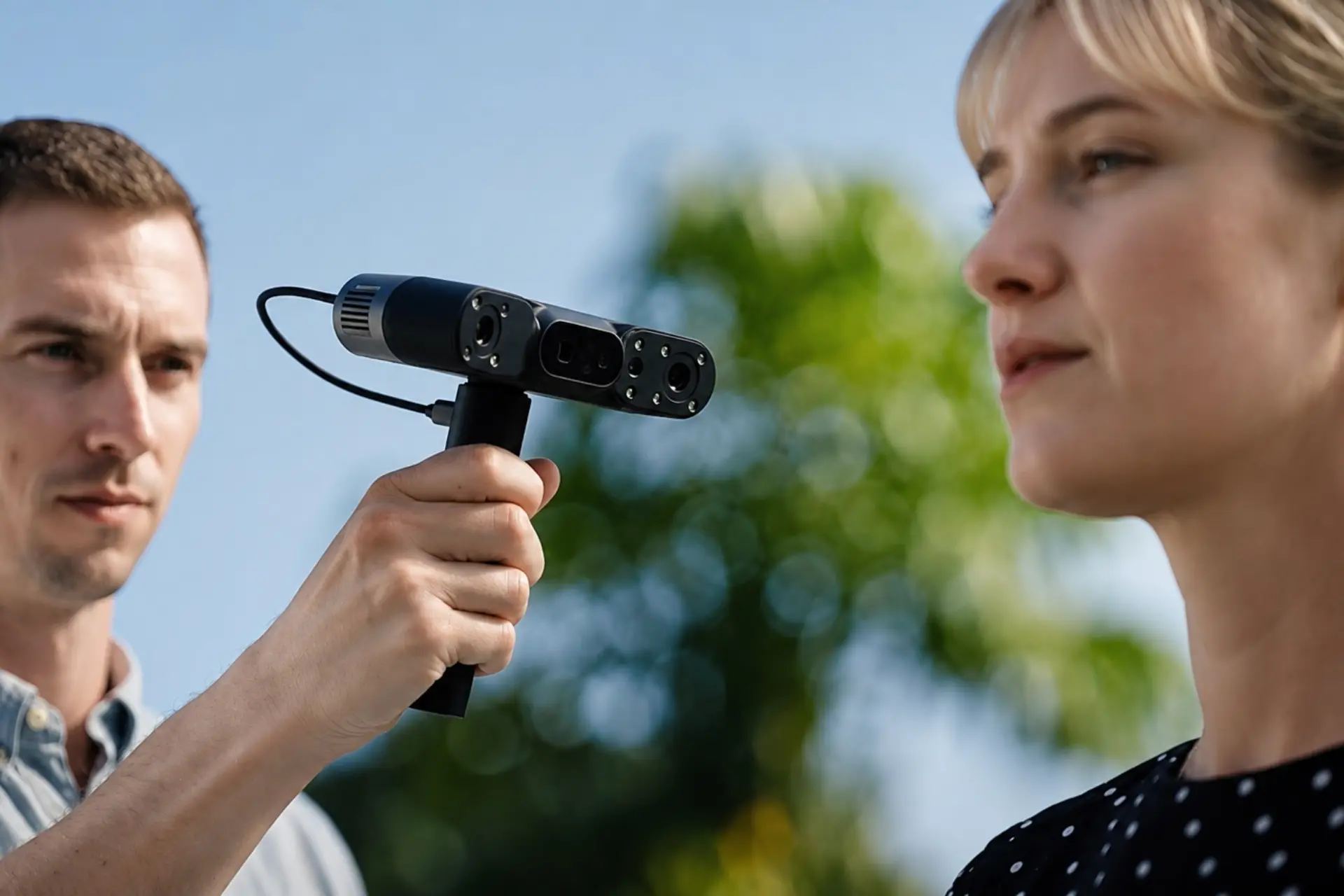
The Revopoint POP 4 is a portable hybrid 3D scanner combining blue laser, infrared structured light, and VCSEL structured light in a 286g wireless body, with five scanning modes that cover shiny metals, dark surfaces, deep holes, large workpieces, and outdoor environments in direct sunlight, outputting both standard 3D mesh and 3D Gaussian Splat models. If you have been waiting for a single portable scanner that does not require you to compromise on surface type, object size, or environment, the POP 4 is the most complete answer Revopoint has built in 2026.
Revopoint POP 4 at a Glance
- Scanning Technologies: Blue laser, infrared structured light, VCSEL structured light
- Scanning Modes: Full-Field HD, VCSEL Rapid, Hybrid HD, 30-Cross Blue Laser Lines, Single-Line Deep Hole
- Frame Rate: Up to 105 fps
- Point Capture: Up to 5 million points per second (Full-Field HD), up to 2 million (30 Cross-lines)
- Volumetric Accuracy: 0.03mm plus 0.05mm x L (m)
- Max Scanning Distance: Up to 800mm in VCSEL Rapid Scanning mode
- Output Formats: 3D mesh and 3D Gaussian Splats
- Battery: Up to 4 hours wireless operation
- Weight: 286g
- Compatibility: Windows, macOS, Android, iOS
- MSRP: $919
- Kickstarter Price: From $579
- Shipping: July 2026
- Best For: 3D printing, reverse engineering, product design, automotive work, VR/AR content, heritage documentation
What Is Revopoint?
Revopoint is a 3D scanning hardware company focused on making professional-grade scanning accessible to creators, engineers, and enthusiasts rather than restricting it to large industrial budgets. The POP 4 is their 9th Kickstarter campaign and 21st major product launch, which means they have a track record of delivering what they announce. Previous POP series scanners have been widely used in 3D printing, reverse engineering, automotive work, and digital content creation.
The POP 4 is a significant step forward built around a hybrid scanning system that addresses the single biggest limitation most affordable scanners share: they work well on easy surfaces and fall apart on hard ones.
What Makes the POP 4 Different?
Most portable 3D scanners rely on a single scanning technology. Infrared structured light works well on matte surfaces but struggles with dark or highly reflective objects. Blue laser handles shiny metals and dark surfaces better but has its own range limitations. Choosing one means compromising on the other, and most users end up working around that limitation rather than solving it.
The POP 4 does not ask you to choose. The hybrid system combines blue laser with two types of structured light, NIR and VCSEL, giving it five distinct scanning modes that each address different real-world conditions. VCSEL Rapid Scanning works outdoors in direct sunlight and captures large workpieces and people up to 800mm away. The 30-Cross Blue Laser Lines mode handles dark and shiny surfaces that would defeat a standard infrared scanner. Single-Line Deep Hole mode reaches into narrow cavities that broader scanning patterns cannot access. Full-Field HD and Hybrid HD modes cover bodies, faces, and complex geometry where full coverage matters more than surface challenge.
The 3D Gaussian Splat output is the other meaningful addition over previous POP scanners. Standard 3D scanners produce mesh files. Gaussian Splats capture surface appearance and lighting in a way that produces vivid, lifelike 1:1 3D models that go beyond what standard mesh output can represent. For digital content, VR/AR, and visual documentation workflows, that is a real capability upgrade over a mesh-only approach.
What Are the Key Specs?
At 105 fps and up to 5 million points per second in Full-Field HD mode, the POP 4 captures data fast enough for handheld scanning without the gaps and tracking failures that slower scanners produce during movement. The 30 Cross-lines mode runs at up to 2 million points per second with a volumetric accuracy of 0.03mm plus 0.05mm per meter, which is the standard used for precision fit work in engineering and reverse engineering.
The working distance extends to 800mm in VCSEL Rapid Scanning for large object capture and down to close-range detail work in Multi-line Laser Mode. That range across a single device is what makes the POP 4 an all-rounder in practice rather than just in the marketing copy. The 4-hour wireless battery life, 286g body weight, and direct smartphone connectivity cover field scanning scenarios that tethered, heavier devices cannot reach.
How Does the POP 4 Compare to Alternatives?
Portable 3D scanners in the $500 to $1,000 range typically rely on one scanning technology, which means they work well in their intended use case and produce poor results outside it. A scanner built for faces and bodies will struggle with automotive parts. A scanner designed for small mechanical objects will not handle outdoor scanning in direct sunlight. The POP 4 addresses those use cases through its five-mode hybrid system rather than requiring separate devices for each scenario.
At $919 MSRP, it sits in a range where the competition is either narrowly capable or significantly more expensive to achieve equivalent surface and environment flexibility. The Kickstarter pricing from $579 improves that comparison further for early backers who accept the July 2026 delivery timeline.
Best Ways to Use the Revopoint POP 4
For 3D printing workflows, the Full-Field HD mode for general objects combined with the 30-Cross Blue Laser mode for detailed or problem surfaces covers the majority of scan-to-print use cases. AI-powered object segmentation in the Revopoint software removes background noise automatically, reducing post-processing time compared to manual cleanup.
For automotive and reverse engineering work, the outdoor VCSEL mode handles body panels and large parts directly in field conditions, and the single-line deep hole mode captures internal geometry that broader scanning patterns miss entirely. For digital content and VR/AR work, the 3D Gaussian Splat output integrates with workflows that have adopted the format as a standard for lifelike asset creation.
Pros and Cons
- ✅ Hybrid blue laser and infrared scanning handles dark, shiny, and complex surfaces without scanning spray
- ✅ Five distinct scanning modes covering small objects, large workpieces, bodies, deep holes, and outdoor environments
- ✅ Up to 0.03mm volumetric accuracy and 105 fps capture speed in a 286g portable body
- ✅ 3D Gaussian Splat output alongside standard mesh for vivid, lifelike 1:1 3D models
- ✅ Wireless scanning with 4-hour battery life, compatible with Android and iOS
- ✅ AI-powered object segmentation reduces manual post-processing time
- ✅ Revopoint's 9th Kickstarter campaign with a proven 21-product delivery track record
- 🟡 $919 MSRP is a significant investment, though Kickstarter pricing reduces the entry point to $579
- 🟡 July 2026 shipping means Kickstarter backers are pre-ordering rather than buying a product currently on shelves
- 🟡 Accuracy varies by surface condition, scanning mode, and working distance as noted in official specifications
Who Is the Revopoint POP 4 Best For?
- 3D printing enthusiasts: Scan-to-print workflows across object types without switching devices or applying scanning spray to handle difficult surfaces.
- Reverse engineers and product designers: 0.03mm accuracy and five modes for capturing mechanical parts and complex geometry in real working conditions.
- Automotive builders and restorers: Outdoor body panel scanning in direct sunlight, with handling for dark paint and reflective metal that defeats single-technology scanners.
- VR/AR and digital content creators: 3D Gaussian Splat output for vivid, lifelike 1:1 digital assets that exceed standard mesh quality.
- Heritage and documentation professionals: Portable wireless scanning with multi-mode flexibility for objects and environments that cannot be brought into a controlled setup.
Final Verdict: Is the Revopoint POP 4 Worth It?
The POP 4's strongest argument is the one that is hardest to dismiss: it is a single portable device that does not require you to pick a surface type and stick to it. The hybrid scanning system, five modes, and outdoor VCSEL capability address the limitations that have made every previous portable scanner in this price range a partial solution. The 0.03mm accuracy and 105 fps capture speed are real specifications backed by a company with 20 previous products and eight prior campaigns behind this one.
At $919 MSRP it is a serious purchase. At $579 through Kickstarter with a July 2026 delivery, it is a strong value proposition for what the specification sheet delivers. For anyone who has been waiting for a portable 3D scanner that genuinely handles the full range of what they want to scan without compromise, the POP 4 is the most complete version of that product available in 2026.
About Previewer
Previewer is an independent product discovery platform featuring honest, in-depth reviews of emerging and noteworthy brands across food, wellness, gear, and lifestyle. Every product we feature is selected on merit, and our reviews are written to help real people make informed decisions, not to push a sale. If a brand is featured here, it's because we think it's worth your attention.
Last updated May 2026