
Solly 280W Solar Power Bank
One device replaces your power bank, wall charger, travel adapter, and USB-C cable. $115.
Last Updated: May 2026
TL;DR
- Solly delivers 280W total output across two 140W USB-C ports, simultaneously handling two laptops at full charging speed, with a built-in wall plug supporting 110V/220V and multi-region travel adapter compatibility that eliminates three separate accessories in one 8 x 6 x 3.5cm device.
- The solid-state battery is rated for over 3,500 cycles at above 80% capacity retention, recharges from empty in as little as 26 minutes, adds around 800mAh per hour via the built-in solar panel, and passed a drill-test demonstration without fire or failure.
- MSRP is $115, with Kickstarter early bird pricing from $79. Over $294,000 raised from 2,400-plus backers against a $3,000 goal. Shipping August 2026.
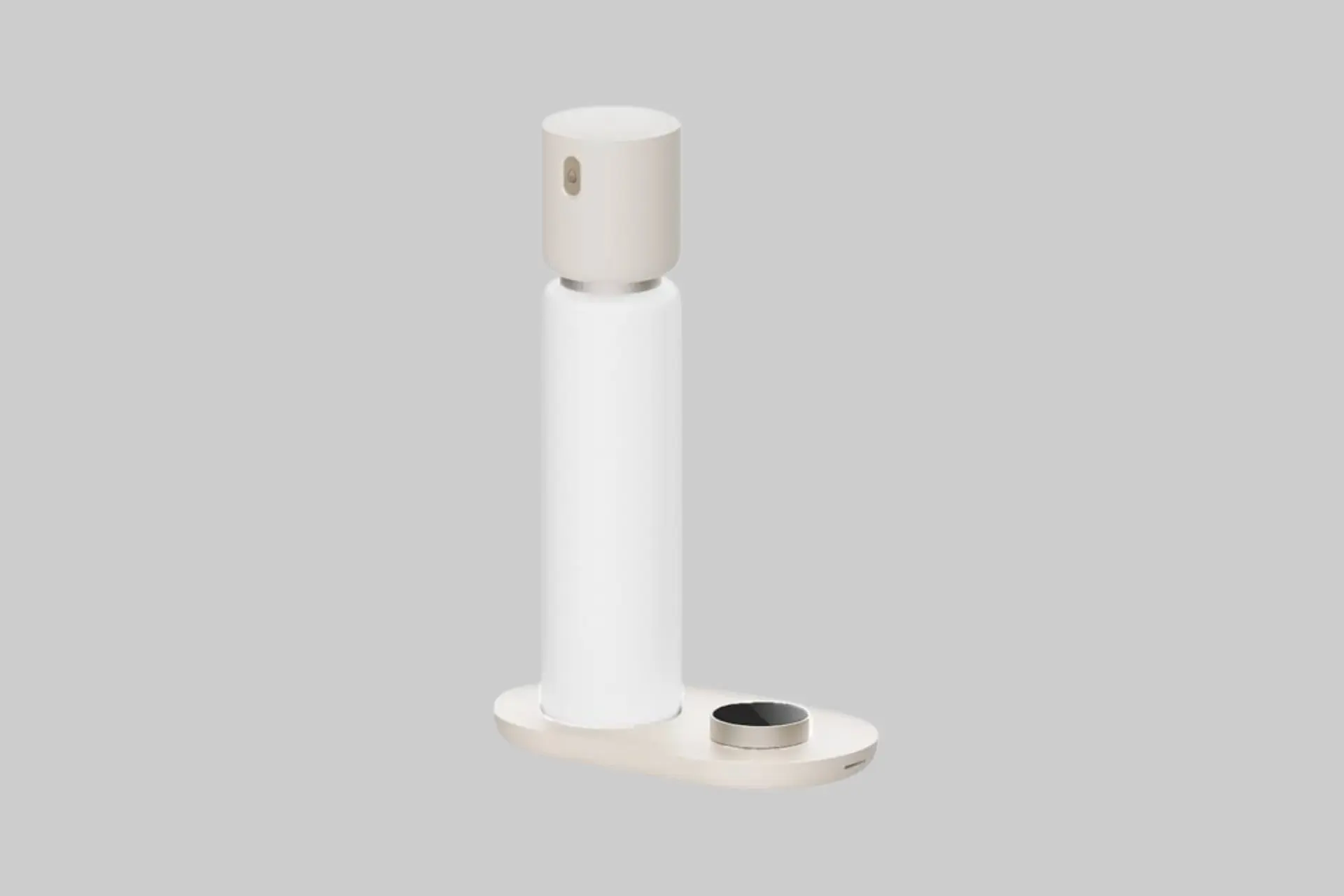
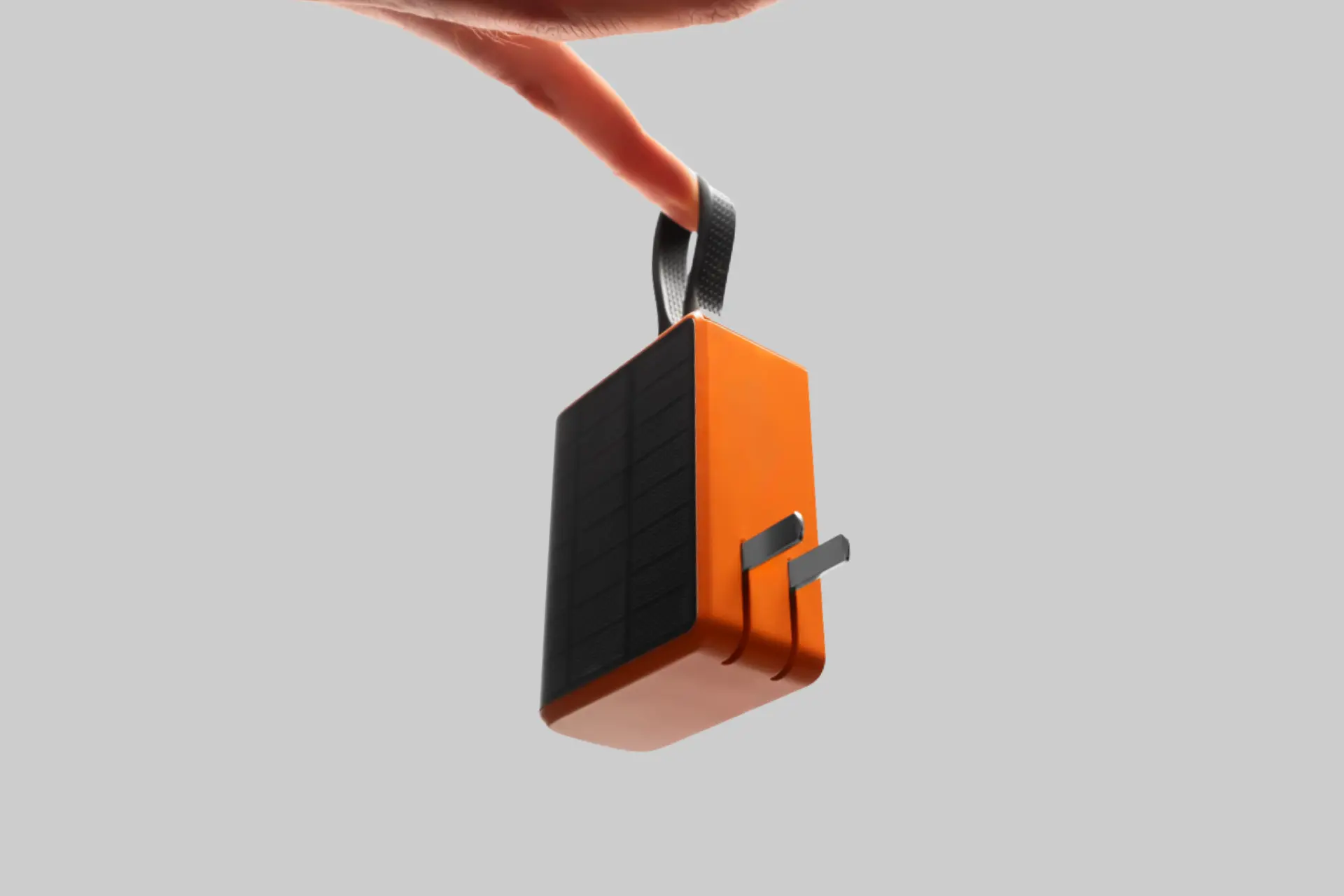
Solly is a 20,000mAh solid-state power bank with dual 140W USB-C ports, a built-in 110V/220V wall plug, an integrated solar panel, pass-through charging, and a 100W USB-C lanyard cable, all in a 400g airline-safe device that recharges itself in as little as 26 minutes from a wall outlet. If you have ever arrived somewhere and realized your wall charger or travel adapter is in your other bag, Solly is designed to make that problem impossible.
Solly at a Glance
- Capacity: 20,000mAh / 74Wh
- Total Output: 280W (dual 140W USB-C)
- USB-C Ports: 2x USB-C at up to 140W each (PD 3.1)
- USB-A Port: 20W
- Self-Recharge: As fast as 26 minutes from wall
- Solar Input: Around 800mAh per hour in good sunlight
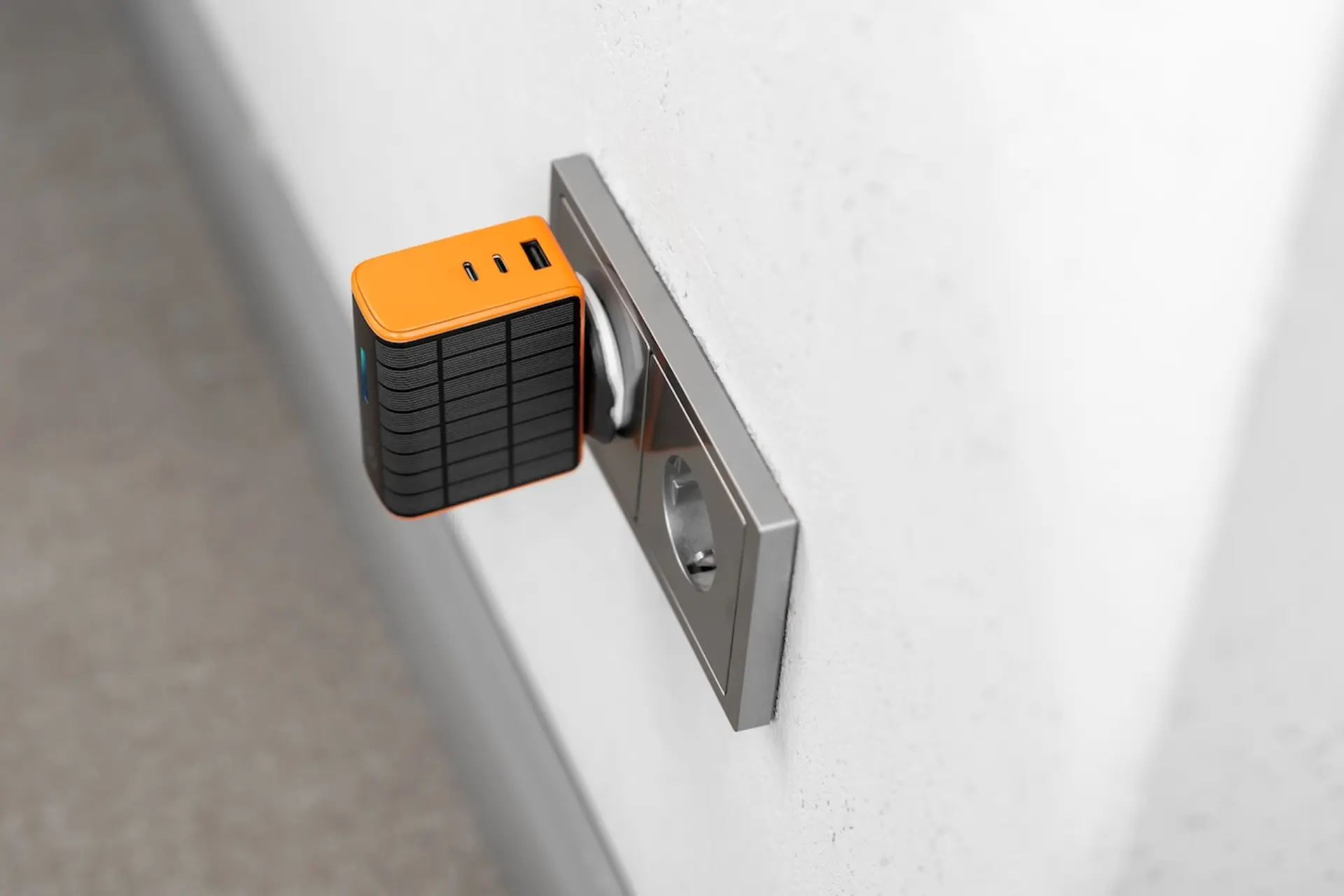
- Built-in Wall Plug: 110V/220V, folds into device body
- Travel Adapter: US, UK, EU, AU plug versions
- Lanyard: Built-in 100W USB-C to USB-C cable
- Battery Type: Solid-state, rated 3,500-plus cycles
- Size: 8 x 6 x 3.5cm
- Weight: 400g
- Airline Safe: Yes, 74Wh within standard carry-on limits
- Pass-Through: Yes
- MSRP: $115
- Kickstarter Price: From $79
- Shipping: August 2026
- Best For: Frequent travelers, remote workers, outdoor users, anyone carrying too many charging accessories
What Is Solly?
Solly is a power hardware brand built around a straightforward observation: most people who carry a power bank also carry a wall charger and a travel adapter, and those three items together take up more bag space and create more packing friction than any of them should. Solly's answer is a single device that handles all three roles without requiring anything extra.
The campaign launched on Kickstarter in late April 2026 after 2.5 years of development across multiple prototype iterations with established manufacturing partners. This is Solly's first product launch. Over $294,000 raised from more than 2,400 backers against a $3,000 goal, with shipping scheduled for August 2026.
What Makes Solly Different?
The consolidation case is the obvious differentiator, but the solid-state battery is the more technically meaningful one. Most portable power banks use lithium-ion batteries with liquid electrolytes. Solid-state batteries replace that liquid with a solid material, making the cell more stable under physical stress and less likely to fail or ignite when damaged. Solly demonstrated this with a drill test in their campaign: the battery was drilled through and continued operating without fire or failure. That is not a result you see from a standard lithium-ion cell, and it is not a typical demonstration for a consumer power bank.
The 26-minute self-recharge from a wall outlet is the other number that changes how the device is used. Most 20,000mAh power banks take several hours to recharge. Getting back to full in under half an hour means you stop managing battery levels as a constant background concern and plug in whenever you happen to have a few minutes near an outlet.
The built-in lanyard that doubles as a 100W USB-C cable is a small detail that adds up in practice. The cable is physically attached to the device. One fewer thing to track, one fewer thing to leave behind.
What Are the Key Specs?
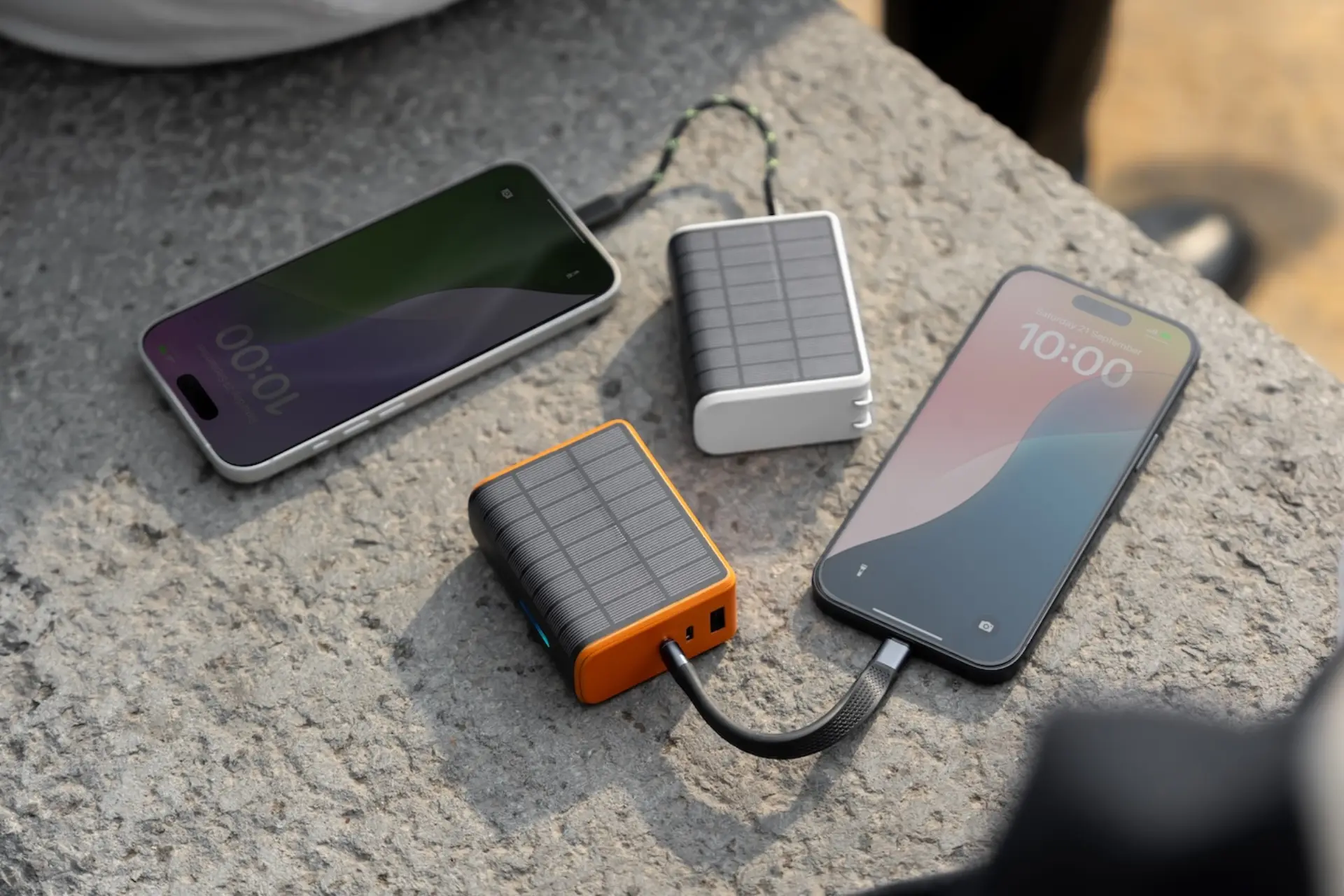
The dual USB-C ports each deliver up to 140W using PD 3.1, which covers two MacBook Pro-class laptops charging simultaneously at full speed. Combined 280W output is the ceiling across both ports at once. The 20W USB-A port handles older devices that do not use USB-C. Pass-through charging works without instability, so you can charge devices from Solly while Solly is plugged into a wall, with the system managing power flow automatically.
The solar panel generates around 800mAh per hour in good sunlight. That is not a primary recharge method, but it is meaningful in situations where wall access is limited: a long travel day, an outdoor trip, or a flight delay where every bit of additional buffer matters. The solar panel is a contingency feature, and framing it as anything more than that would be misleading.
The solid-state battery is rated for over 3,500 charge cycles while retaining above 80% of its original capacity. At one full cycle per day, that is roughly nine years of use before the battery degrades meaningfully. For a device used daily, that longevity matters considerably more than it does for something used occasionally. The 74Wh capacity meets standard airline carry-on limits, so it travels with your carry-on without paperwork or special handling.
How Does Solly Compare to Alternatives?
Standard 20,000mAh power banks with 100W USB-C output exist at similar or lower price points. None of them have a built-in wall plug, travel adapter, or solar charging. Adding those separately means a wall charger, a travel adapter, and the cables to connect them: three additional items to pack and three things you can misplace. Solly's total footprint at 400g is smaller and lighter than carrying all of those separately.
Power banks with solar charging exist at lower price points but typically max out at 18W to 20W output, which handles phones but not laptops. The 140W per port output is what separates Solly from outdoor-oriented power banks that treat solar as the primary feature and charging speed as secondary.
Best Ways to Use Solly
The most practical daily travel setup is using Solly as the only charging accessory in your carry-on. Plug it directly into a hotel wall socket using the built-in plug to top up overnight. Use it to charge a laptop and phone simultaneously during a flight or at a gate. The 74Wh capacity clears airline rules in most countries without additional documentation.
For remote work in outdoor or mixed environments, the solar panel adds useful backup even while you are drawing from the bank simultaneously. The pass-through charging means Solly also works as a direct wall charger at a desk with both USB-C ports active while the bank recharges in the background, consolidating roles further without any mode-switching required.
Pros and Cons
- ✅ Dual 140W USB-C ports handle two laptops simultaneously at full charging speed
- ✅ Built-in 110V/220V wall plug with US, UK, EU, and AU support eliminates separate wall charger and travel adapter
- ✅ Solid-state battery with drill-test durability and 3,500-cycle lifespan rating
- ✅ 26-minute self-recharge from wall, fast enough to fit into short breaks
- ✅ Built-in 100W USB-C lanyard cable eliminates the need for a separate charging cable
- ✅ Solar panel adds around 800mAh per hour as a backup charging source
- ✅ 74Wh capacity meets standard airline carry-on limits globally
- ✅ Pass-through charging, shock-proof, water-resistant, with overcurrent and overheat protection
- 🟡 400g is heavier than a slim power bank alone, though lighter than a power bank plus wall charger plus adapter combined
- 🟡 Solar charging is a backup feature, not a fast or primary recharge method
- 🟡 First product from a new brand with August 2026 delivery, so backers are pre-ordering without a prior delivery track record
Who Is Solly Best For?
- Frequent travelers: One device replaces the power bank, wall charger, and travel adapter currently taking up three spots in a carry-on bag.
- Remote workers and digital nomads: 140W per port handles laptop-class devices in airports, cafes, and outdoor setups without a separate charger.
- Outdoor users: Solar panel and shock-proof, water-resistant build extend usability beyond indoor and airport environments.
- Minimalist packers: Anyone who has counted the number of charging accessories they carry and decided the number is too high.
- Durability-focused buyers: Solid-state construction and a demonstrated drill-test result for anyone who has had a power bank fail at an inconvenient moment.
Final Verdict: Is Solly Worth It?
Solly's case is simple and holds up. Three accessories become one device. The device recharges in 26 minutes. It handles two laptops at full speed simultaneously. The solid-state battery is meaningfully more durable than what most power banks use, and the 3,500-cycle lifespan justifies the upfront cost over a cheaper device replaced every two years.
At $115 MSRP or $79 on Kickstarter, this is a product for people who are already spending more than that across the three accessories it replaces and are ready to stop packing them separately. For that buyer in 2026, Solly is a straightforward yes, with the honest caveat that this is a first campaign from a new brand with delivery scheduled for August 2026.
About Previewer
Previewer is an independent product discovery platform featuring honest, in-depth reviews of emerging and noteworthy brands across food, wellness, gear, and lifestyle. Every product we feature is selected on merit, and our reviews are written to help real people make informed decisions, not to push a sale. If a brand is featured here, it's because we think it's worth your attention.