Interviews
He Put a Wind Tunnel on Your Desk
How FUN-TECH-LAB turned airflow visualization into a product that feels part science lab, part kinetic art installation
 Founder Interview: Amna Mettmann of Brause on Bringing German Craft Non-Alcoholic Beverages to America
 Founder Interview: Erik Ellington of Easy Does It on Building a Non-Alcoholic Lager for People Who Just Want a Beer
 Founder Interview: Oscar and Jonathan Gomez of Piedra Studios on Turning Concrete into Collectible Automotive Art
 UPLIFT V3 Standing Desk Review by Carson Hinckley: A Decade of Standing Desks, Then I Upgraded
 Founder Interview: Phuong Ho of Phuong's Pepper Paste on Turning a Homemade Chili Sauce Into a Growing Food Brand
Reader activity
Fresh buying guides, emerging brands, and product discoveries from Previewer.
Free forever. One useful email a week.
Wind tunnels live in aerospace labs and automotive design centers. They cost hundreds of thousands of dollars and require teams of engineers to operate.
Jayden thought that was a problem worth fixing.
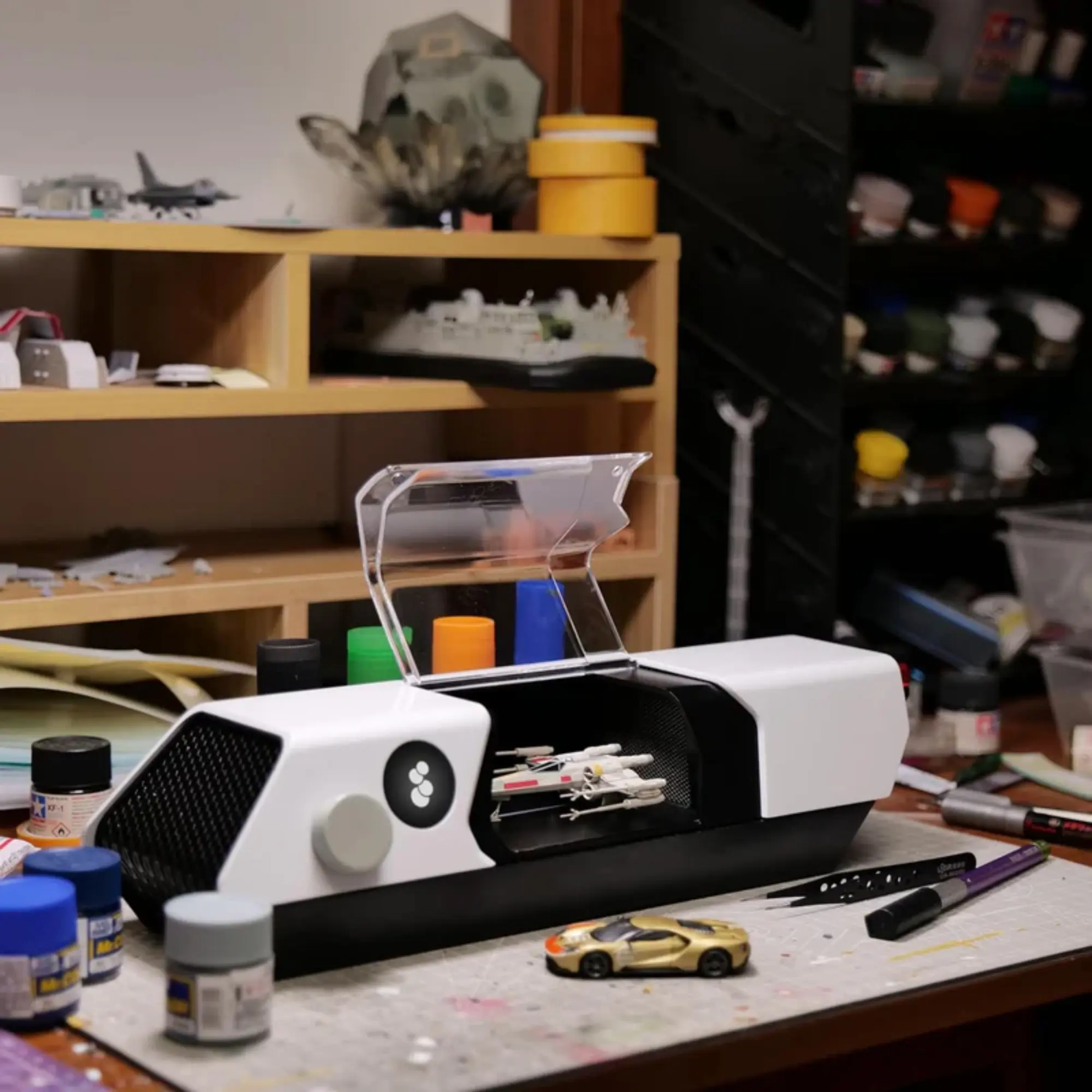
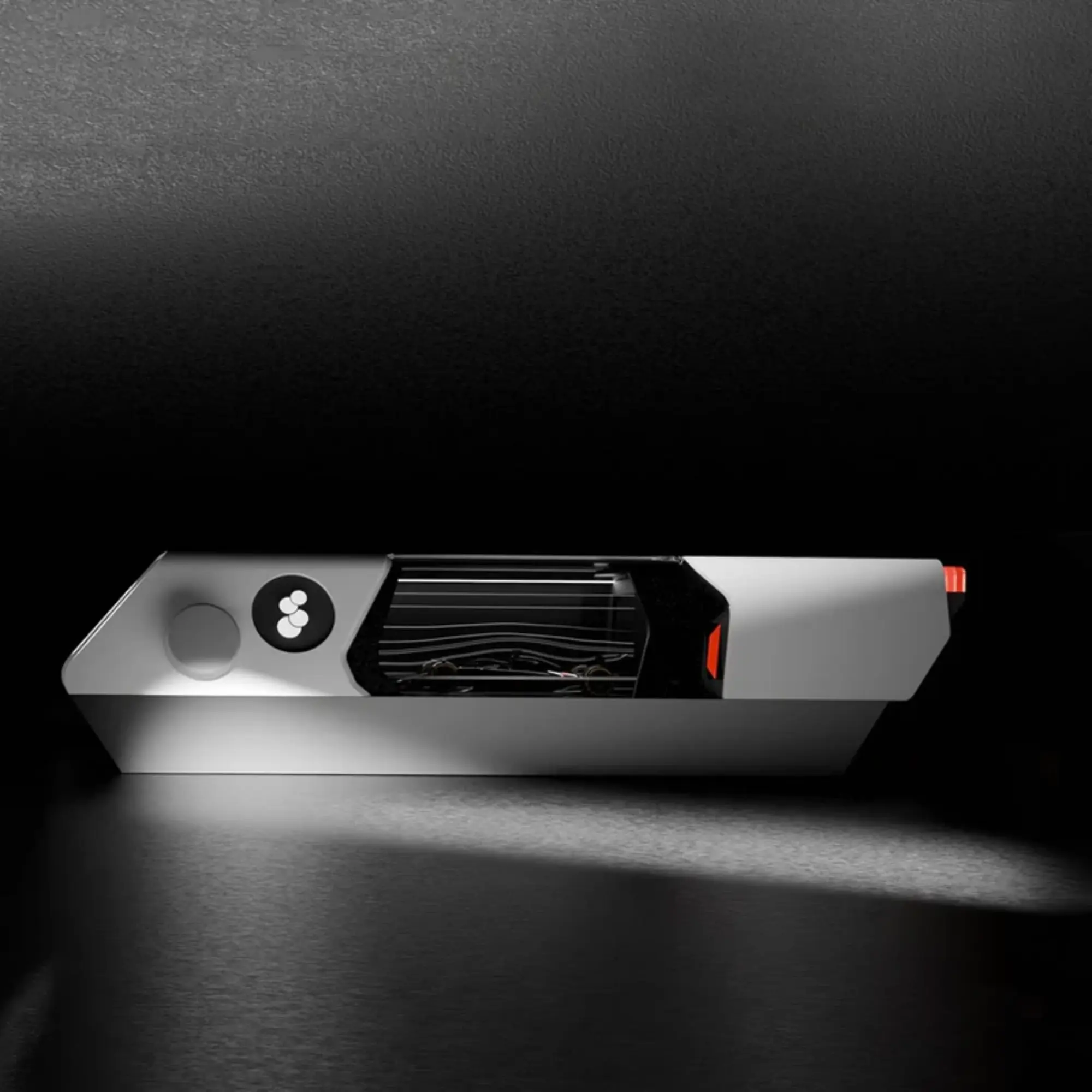
Windsible is a consumer-grade desktop wind tunnel that makes airflow visible in real time — vapor trails, real aerodynamics, and a product that people have started calling a "Cyber Fish Tank." We sat down with Jayden to talk about building for niche communities, why hardware businesses demand patience, and what it means when your customers describe your product in ways you never imagined.
The Product and Audience: What is Windsible and who is it for?
We're building Windsible, a consumer-grade desktop wind tunnel that makes airflow visible in real time. Using vapor trails and real airflow, Windsible allows users to visualize aerodynamics in a way that's interactive, educational, and surprisingly beautiful. What started as a tool for automotive enthusiasts and engineering students has attracted a much broader audience — including diecast collectors, desk setup enthusiasts, STEM educators, and people who simply appreciate unique kinetic objects. It's one of those products that's difficult to explain but instantly makes sense once you see it.
Join thousands discovering the next big brands before they blow up. Get full access to our in-depth reviews and guides.
No spam, unsubscribe anytime. We respect your privacy.
The Spark: When did you launch, and what made you say "I need to build this"?
The idea came from a simple frustration. Traditional wind tunnels are incredibly expensive and inaccessible, while CFD software often requires a steep learning curve. As automotive design students and car enthusiasts, we wanted a way to make airflow visible, interactive, and emotional. Instead of living inside a laboratory, we imagined a wind tunnel that could sit on your desk. That idea became Windsible.
The Launch: How did you build buzz before launch?
Before launch, we focused heavily on visual storytelling. We shared videos showing vapor trails flowing over diecast cars, cyberpunk-inspired desk setups, and real aerodynamic experiments. Rather than relying heavily on traditional advertising, we leaned into short-form content, niche automotive communities, and AI-search-oriented content strategies. The goal was simple: be discoverable wherever curiosity starts.
The First 100: How did you find your first customers?
Our earliest customers came from highly specific communities — automotive design students, diecast collectors, sim-racing enthusiasts, and desk setup creators. Short-form videos did most of the heavy lifting because Windsible is very much a "show, don't tell" product. Once people saw airflow visualized on a desktop, they immediately understood why it was interesting. From there, growth happened organically.
The Advice: What would you tell a first-time founder in their first 90 days?
Don't spend your first 90 days trying to look like a big company. Spend your first 90 days understanding a very specific group of people. The more focused your audience is, the easier every product, marketing, and business decision becomes. Clarity beats scale early on.
The Reality Check: What is the hardest part of this journey that people don't see on social media?
Maintaining momentum while everything still feels uncertain. Social media captures the exciting moments, but most of the work happens behind the scenes — testing, manufacturing issues, content iterations, operational problems. The same challenges repeated over and over again. Hardware businesses especially teach patience because progress is often slower than people realize.
The Milestone: What has been your biggest "we made it" moment so far?
One of the most rewarding moments came when customers started describing Windsible in ways we never expected. People began calling it a "Cyber Fish Tank" or a "kinetic desk companion." That was the moment we realized Windsible had evolved beyond a tool. It had become something cultural — something people connected with emotionally.
The AI Trend: How have you used AI to help your business grow?
AI has become a major part of how we build and grow. We use it to understand how people search for products, what questions large language models prioritize, and how content can become more discoverable inside AI-generated answers. We also use AI for concept visualization, copywriting support, video production workflows, and rapid creative iteration. For a small team, it dramatically increases what we're capable of executing.
The Horizon: What should we be excited to see from FUN-TECH-LAB in the next six months?
We're excited to take Windsible beyond automotive culture. Over the next six months, we'll be expanding deeper into desk culture, kinetic art, and educational experiences. We're also working on creator collaborations, limited editions, and experimental display concepts that push the product into entirely new categories.
The Recommendations: What are your favorite under-the-radar brands right now?
CPG: Liquid Death
Tech: Nothing
Gear: Peak Design
The Shop: Where can readers find Windsible?
Purchase Windsible directly at fun-tech-lab.com.
The Connection: Where is the best place to follow along?
Follow FUN-TECH-LAB at fun-tech-lab.com for airflow experiments, product development updates, behind-the-scenes engineering, and cinematic airflow content.