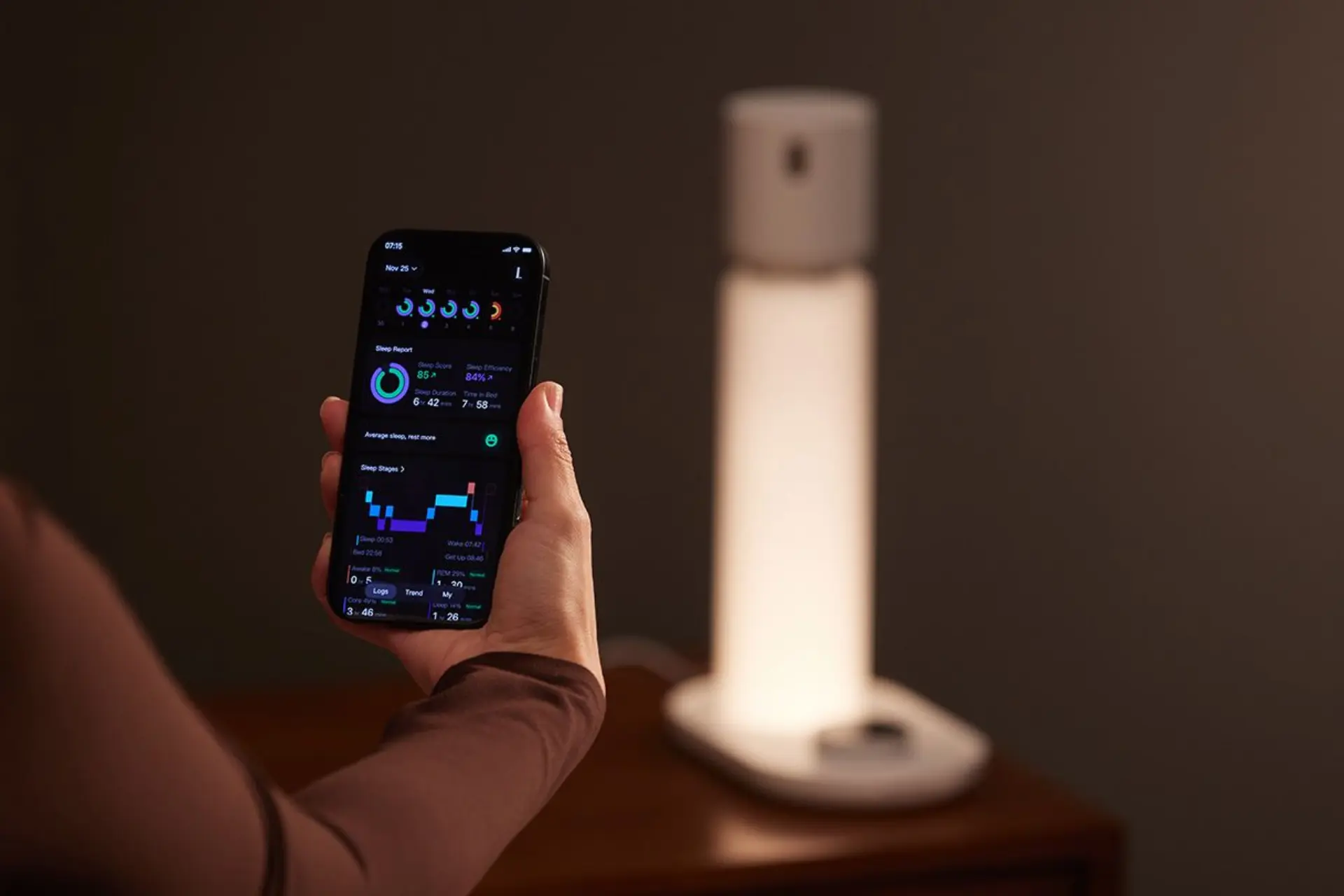
Sleepal AI Lamp
Millimeter-wave radar tracks your breathing, heart signals, and posture from your bedside without anything touching your body. $299.
Last Updated: September 2026
TL;DR
- Millimeter-wave radar and thermal sensing track breathing, heart signals, posture, and movement from the bedside without any contact or wearable, with respiratory rate accuracy of RMSE less than 2 versus medical-grade devices based on over 2,000 PSG nights of training data.
- Ra95-plus full-spectrum illumination with rg0 zero-blue light supports wind-down with adaptive soundscapes, fades after you fall asleep, and times wake-up during light sleep for a gentler morning, alongside built-in light, noise, and temperature environment sensors.
- Local data processing, no optical camera, and a hardware privacy switch for a privacy-first design that keeps sensing anonymous and under user control, with US patent US12241977B1 and multiple CN and PCT patents pending or granted.
The Sleepal AI Lamp is a contactless sleep tracker and bedside light using millimeter-wave radar and thermal sensing to track breathing, heart signals, posture, and movement without any wearable, with respiratory rate accuracy of RMSE less than 2 versus medical-grade devices based on models trained on over 2,000 PSG nights, Ra95-plus full-spectrum illumination with rg0 zero-blue light technology, adaptive soundscapes, environment sensing for light, noise, and temperature, health tracker sync, local data processing, no optical camera, and a hardware privacy switch. If sleep trackers have disrupted your sleep more than they have helped it, the Sleepal is the monitor built to track without touching.
Sleepal AI Lamp at a Glance
- Sleep Tracking Method: Millimeter-wave radar and thermal sensing, contactless
- Respiratory Rate Accuracy: RMSE less than 2 vs medical-grade devices
- Training Data: Over 2,000 PSG nights
- Lighting: Ra95-plus full-spectrum, rg0 zero-blue light
- Light Behavior: Adaptive wind-down, fades after sleep onset, smart wake timing
- Audio: Adaptive soundscapes
- Environment Sensors: Light, noise, temperature
- Health Integration: Syncs with other health trackers
- Privacy: Local data processing, no optical camera, hardware privacy switch
- Patents: US12241977B1, multiple CN and PCT patents
- Best For: Anyone who finds sleep wearables disruptive, professionals, parents, caregivers, sleep-quality seekers
What Is the Sleepal AI Lamp?
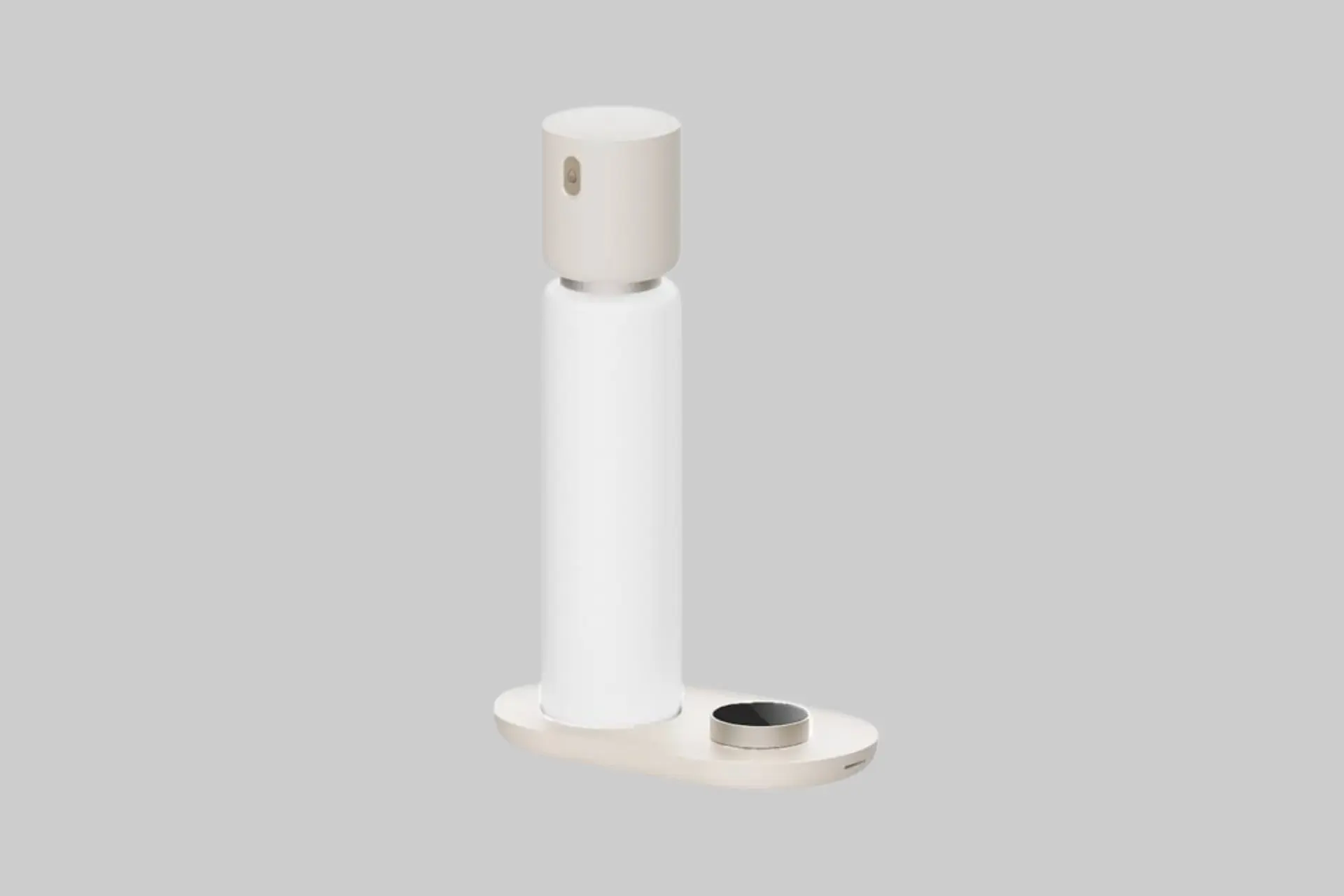
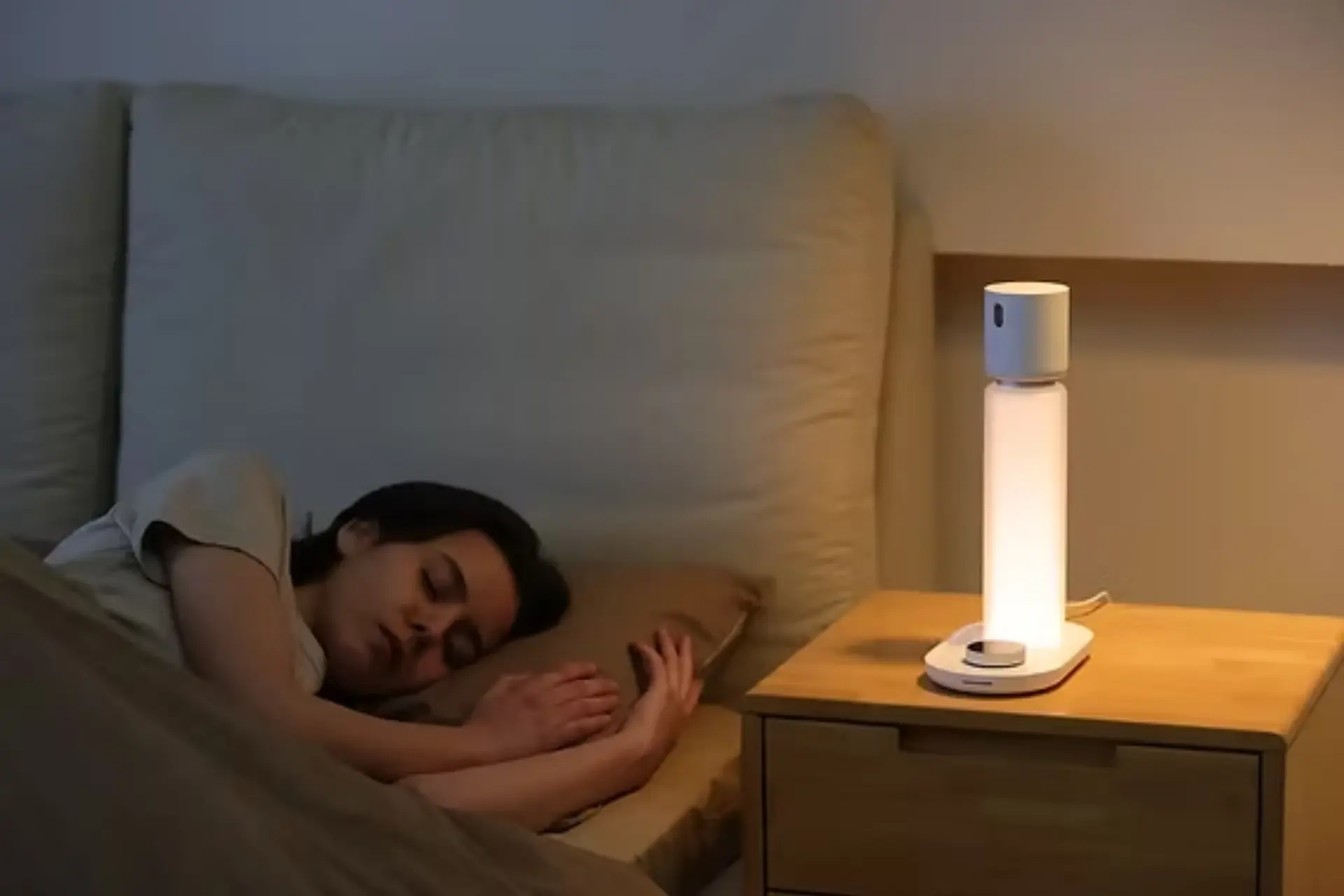
The Sleepal AI Lamp is a bedside device that combines passive contactless sleep monitoring with functional bedside lighting, designed for people who want meaningful sleep data without wearing a device that affects the sleep it is trying to measure. The device sits on a nightstand and uses millimeter-wave radar and thermal sensing to track the user's breathing rate, heart dynamics, posture, and movement throughout the night from across the room, without any physical contact.
The bedside light component is built around sleep science rather than just illumination convenience: Ra95-plus full-spectrum lighting with zero-blue light technology at the rg0 standard supports the wind-down process, fades autonomously after sleep onset, and times wake-up alerts during lighter sleep stages for a more natural morning transition. The result is a device that plays a functional role in the entire sleep cycle rather than simply recording it.
What Makes the Sleepal Different?
The contactless tracking approach is the defining differentiator from both wearable sleep trackers and under-mattress sensor pads. Wearables add something to the body that affects comfort and sleep quality, which creates a fundamental measurement paradox: the device changes what it is measuring. Under-mattress pads are less intrusive but limited in what they can detect without contact. Millimeter-wave radar at the bedside detects micro-movements in chest wall expansion, heart rhythm propagation through the body's surface, and gross body position changes with the sensitivity of medical-grade sensing technology, without any physical relationship with the sleeping person.
The RMSE less than 2 respiratory rate accuracy versus medical-grade devices is the clinical validation claim that distinguishes Sleepal's accuracy specification from consumer sleep trackers that report sleep stages without clinical validation. Respiratory rate is one of the most diagnostically meaningful vital signs during sleep, and RMSE less than 2 breaths per minute compared to PSG (polysomnography) devices represents accuracy approaching clinical monitoring rather than consumer approximation. The 2,000-plus PSG nights of training data is the dataset scale that allows the underlying AI models to generalize accurately across the wide variation in body types, sleep positions, and breathing patterns that a consumer device encounters.
The hardware privacy switch alongside local data processing and no optical camera reflects a genuine privacy architecture rather than a software policy. A hardware switch that physically disconnects sensing components provides a user-verifiable privacy guarantee that software-only privacy modes cannot match. For buyers who want a camera-equipped smart home device in their bedroom, this is not the right product. For buyers who specifically want sensing without imaging, the no-camera design is the defining specification.
What Are the Key Features?
The Ra95-plus full-spectrum illumination is the lighting quality specification that matters for a bedside lamp. Ra (Color Rendering Index) values above 90 are considered excellent for accurate color rendering, which affects how the light interacts with the visual environment of a bedroom. The rg0 zero-blue light rating is the critical sleep specification: blue light in the 460 to 480nm range is the primary environmental signal that suppresses melatonin production and delays sleep onset. A zero-blue light bedside lamp contributes to the body's natural melatonin production rather than suppressing it, which is functionally significant for people who use a bedside lamp in the hour before sleep.
The adaptive lighting behavior that fades after sleep onset removes a common sleep disruption: forgetting to turn off the light or making a phone interaction to turn it off, both of which increase arousal. The smart wake-up timing that triggers alerts during lighter sleep stages rather than at a fixed alarm time reduces sleep inertia, the groggy disorientation that comes from being woken during deep sleep.
The built-in light, noise, and temperature environment sensors provide the contextual data that makes sleep tracking more interpretable. Knowing that poor sleep quality correlated with elevated room temperature or unusual noise events helps users identify environmental causes rather than attributing all variation to unexplained patterns. The health tracker sync allows the Sleepal data to combine with activity, heart rate variability, and other health metrics from wearables the user already trusts for a more complete picture than either provides alone.
How Does Sleepal Compare to Wearable Sleep Trackers?
Apple Watch, Fitbit, and Oura Ring provide continuous sleep tracking alongside fitness and recovery data, with the trade-off of wearing a device through the night. For buyers who find wrist or finger wearables comfortable during sleep, those devices provide strong integration with broader health ecosystems. For buyers who notice the device, remove it during sleep, or sleep better without anything on the wrist or hand, Sleepal provides comparable or better accuracy on respiratory rate, with the additional environmental context that wearables cannot capture.
Under-mattress sensor pads like the Withings Sleep Analyzer provide contactless tracking but cannot detect chest wall expansion or heart dynamics with the precision of millimeter-wave radar, and are limited by the transmission of signals through mattress material. Sleepal's above-mattress radar detection is not mediated by mattress thickness or material.
Best Ways to Use the Sleepal AI Lamp
Positioning the device on a nightstand at a consistent height and distance from the sleep position optimizes the radar sensing geometry. The built-in environment sensors work passively regardless of placement. The adaptive soundscapes and light wind-down work most effectively when used as part of a consistent pre-sleep routine rather than activated only occasionally, as the behavioral context reinforces the physiological wind-down the zero-blue light supports.
For users who already wear fitness trackers or smartwatches, enabling the health tracker sync from the start of use provides the most complete picture from the first night rather than requiring retroactive analysis of how Sleepal data relates to wearable data collected separately.
Pros and Cons
- ✅ Contactless millimeter-wave radar and thermal sensing with no wearable required
- ✅ Respiratory rate RMSE less than 2 versus medical-grade devices, trained on 2,000-plus PSG nights
- ✅ Ra95-plus full-spectrum illumination with rg0 zero-blue light for sleep-supportive lighting
- ✅ Adaptive wind-down, auto-fade after sleep onset, and smart wake timing
- ✅ Built-in light, noise, and temperature environment sensors
- ✅ Local data processing, no optical camera, hardware privacy switch
- ✅ US patent granted, multiple CN and PCT patents filed
- ✅ Health tracker sync for combined data analysis
- 🟡 Requires consistent nightstand placement relative to the sleep position for optimal radar geometry
- 🟡 Tracks one sleeper most accurately from the closer side of the bed in shared-sleep situations
- 🟡 Newer brand with a developing retail presence compared to established sleep tracking brands
Who Is the Sleepal AI Lamp Best For?
- Wearable-averse sleepers: Meaningful sleep tracking without anything on the body that might affect the sleep being measured.
- Privacy-conscious users: Local processing, no camera, and a hardware switch for bedroom sensing that users can verify and control.
- Professionals and busy households: Simple setup with no wearing, no charging, and no daily interaction required for continuous nightly tracking.
- Sleep quality seekers: The combination of accurate tracking, sleep-supportive lighting, and environmental context for users who want to understand and improve their sleep rather than just log it.
- Caregivers: Contactless monitoring for family members who cannot or should not wear tracking devices, with environmental context relevant to care decisions.
Final Verdict: Is the Sleepal AI Lamp Worth It?
The Sleepal AI Lamp earns its positioning as a genuinely different sleep tracking option by combining clinically validated contactless sensing, sleep-supportive full-spectrum zero-blue lighting, and a privacy-first hardware design in a single bedside device. The RMSE less than 2 respiratory accuracy against medical-grade PSG devices and the 2,000-plus PSG night training dataset place the Sleepal's tracking accuracy claims above most consumer sleep trackers' clinical validation.
For anyone who wants to understand their sleep better without wearing something to bed, or who wants a bedside lamp that actively contributes to better sleep rather than just lighting the room, the Sleepal AI Lamp is one of the most coherently designed and technically credible options available in 2026.
About Previewer
Previewer is an independent product discovery platform featuring honest, in-depth reviews of emerging and noteworthy brands across technology, wellness, home, and lifestyle. Every product we feature is selected on merit, and our reviews are written to help real people make informed decisions, not to push a sale. If a brand is featured here, it's because we think it's worth your attention.