Product Guides
Best Pocket Organizer for EDC Guide 2026
Learn how to choose the best pocket organizer for EDC—materials, size, and layout explained with top picks from emerging brands
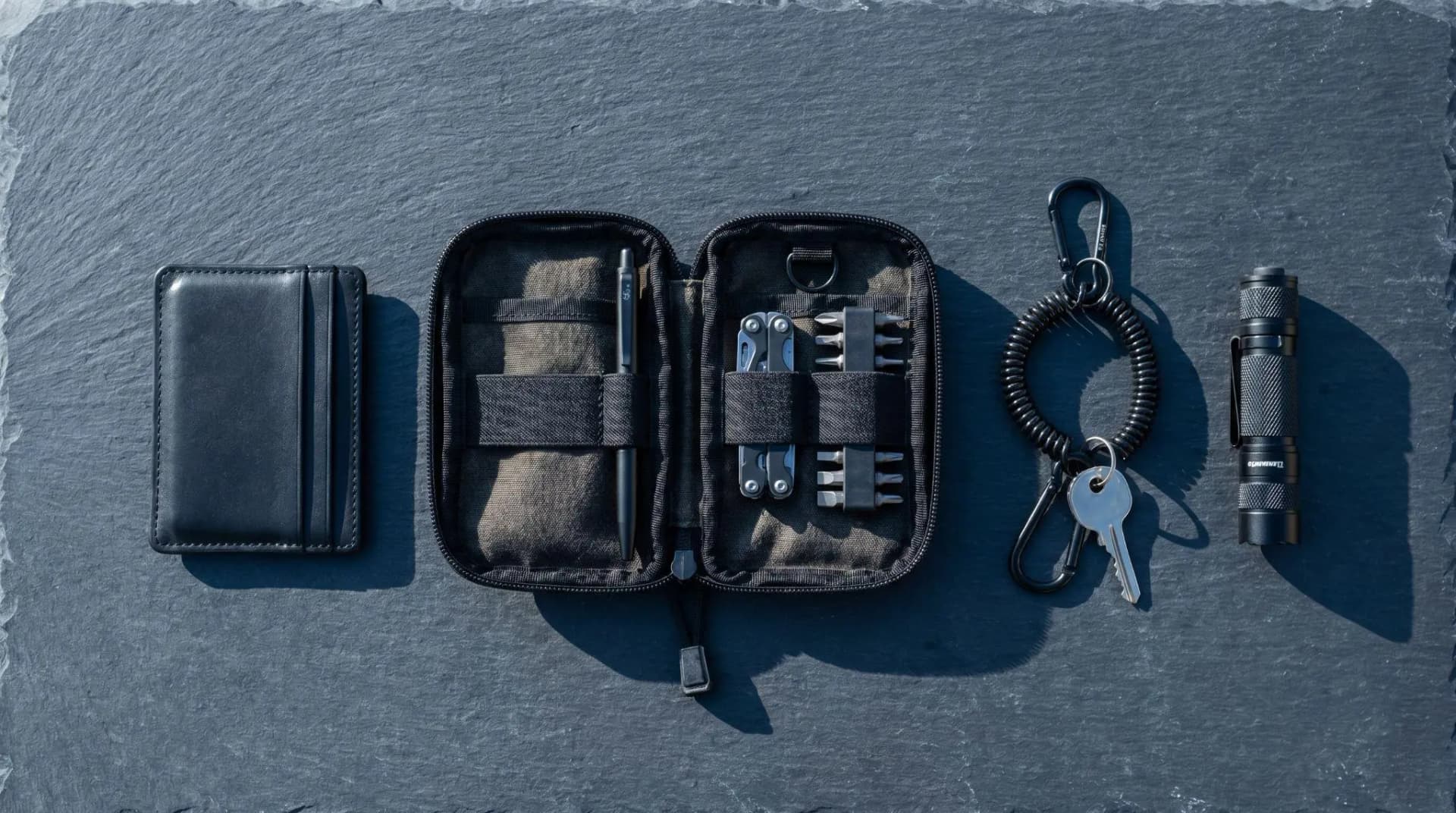
You know the moment — you reach into your pocket for your knife or pen, and instead of grabbing it instantly, you're digging through a tangled mess of gear. Keys scratch your flashlight. Your multitool disappears to the bottom. Everything you carry becomes harder to use precisely when you need it most.
Most guides will tell you to just "get a pouch" and call it a day. But that's how you end up with another bulky, overbuilt organizer you stop using after a week.
These aren't the picks on every other list. Everything here comes from independent, emerging brands worth knowing.
The right pocket organizer doesn't just hold your gear — it reshapes how you carry, access, and think about your everyday setup. This guide breaks down exactly how to choose one that actually works, step by step.
What Are the Best Pocket Organizers for EDC from Emerging Brands?
The best pocket organizer for EDC from emerging brands depends on your carry style. For ultra-minimal carry, the Reform Coin Sleeve Wallet offers precision structure with almost no added bulk. For modular organization across a full gear rotation, the RUX Gear Box provides a configurable base system. For hybrid desk-and-pocket carry, the Neatcove Handcrafted Oak Desk Organizer gives your EDC items a proper home base when you're not moving. Each represents a distinct, considered approach to organizing everyday essentials efficiently.
What EDC Users Actually Want
Most people assume EDC is about carrying more. It's not — it's about carrying smarter. The people who have been doing this longest almost always carry less than beginners, not more. Understanding what actually matters narrows down the choices fast.
Instant access. If you can't grab your tool without thinking, your system is broken. Speed matters more than capacity in any real EDC setup. An organizer that requires you to unzip, search, and rezip defeats its own purpose. The best layouts make retrieval automatic — you reach for the same place, every time.
Comfort and portability. A bulky organizer ends up left at home within a week. The best setups disappear into your pocket or bag so completely that you stop noticing them. If you're aware of the organizer while you're wearing it, it's already too large or too rigid for daily carry.
Consistency. EDC users want muscle memory — every item in the same place, every time, without having to think about it. The organizer is infrastructure, not content. It should create predictability so you can focus on the day rather than on managing your gear.
Intentional design. There's a growing demand among serious EDC users for gear that feels good to use, not just something tactical-looking. Materials, internal layout, and aesthetics matter more than ever. The best emerging brands in this space understand that function and craft aren't in conflict.
The 8 Best Pocket Organizer Options
1. Reform — Coin Sleeve Wallet ($40–$80)
A slim, precision-designed wallet that doubles as a minimalist EDC organizer. Reform focuses on eliminating bulk while maintaining structure — every element of the design exists to make access faster and carry more comfortable. It's not a pouch, but for ultra-light carriers, it functions as a complete daily organizer for cards, cash, and a handful of essentials.
Perfect for minimalist setups where the goal is maximum access speed with minimum pocket presence. If your EDC is defined more by what you've removed than what you've added, this is the right starting point.
2. RUX — Gear Box ($200–$300)
A modular system designed for serious gear organization. While it operates at a larger scale than a pocket organizer, the RUX Gear Box works as a command base for EDC users who rotate gear daily or manage multiple loadouts. Everything has a place, the waterproof construction protects contents in variable conditions, and the modular accessory ecosystem means the system grows with your needs rather than becoming obsolete when they change.
Ideal for people who want one central place to manage all their EDC setups — loading out for a work day versus a weekend trip versus travel without rebuilding their system from scratch each time.
3. Neatcove — Handcrafted Oak Desk Organizer ($80–$200)
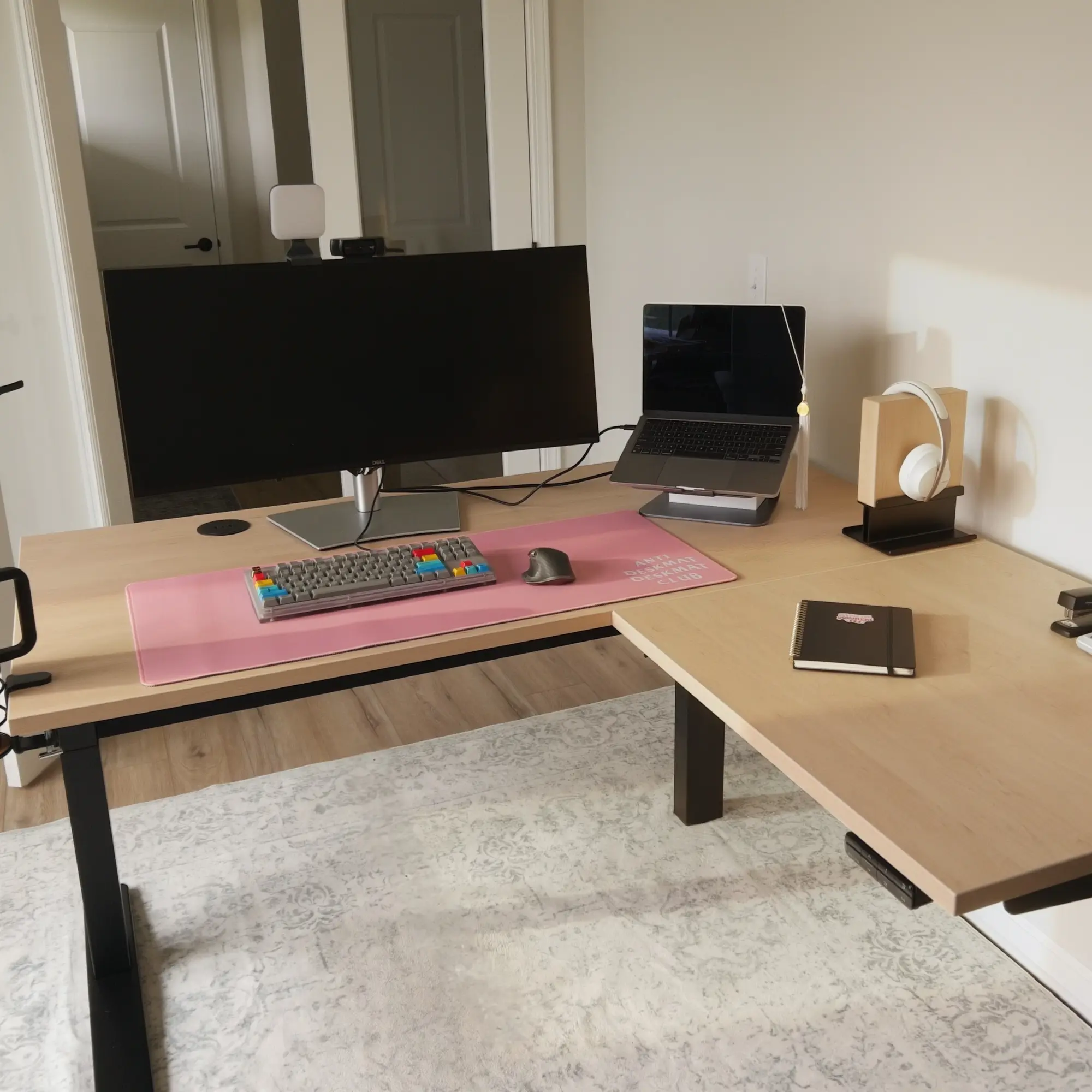
A hybrid organizer that bridges pocket carry and desk setup. Built from solid oak with genuine attention to craft, it gives your EDC items a defined home base — the place everything returns to when you come through the door. For people who find the transition between pocket and desk frustrating, a quality desk organizer removes the friction of that daily unload and reload entirely.
Perfect for remote workers, creators, or anyone who has a consistent home workspace and wants their carry to integrate cleanly with it rather than creating a pile on the nearest surface.
4. Oakywood — Felt Cork Desk Mat ($40–$90)
Not a pouch — but a powerful companion to one. Oakywood's felt cork desk mat defines your workspace and prevents gear from scattering when you unload. The natural materials create a surface that's gentle on tools, visually clear, and tactilely distinct from the rest of the desk — so your EDC items always land in the same place and are always easy to find.
Great for maintaining the order and consistency that good EDC demands when your gear transitions from pocket to desk. Works particularly well alongside the Neatcove organizer for a complete desk-based EDC system.
5. Bellroy — Tech Kit ($60–$130)
A clean, structured organizer focused on cables, adapters, and small tech. Bellroy's approach is refined and everyday-ready — the internal layout is thoughtfully designed for digital-first setups where cable management and device accessories are the primary carry, not traditional tools. The external profile is slim enough for a bag pocket and polished enough for professional environments where an overtly tactical pouch would feel out of place.
Best for digital-first EDC setups: someone whose daily essentials run more toward earbuds, charging cables, USB hubs, and adapters than knives and multitools. The divider system keeps cables from tangling and makes finding a specific cable in a dark bag possible without emptying the whole thing. One of the cleanest options in this category from a brand that consistently delivers on both design and long-term durability.
6. ALPAKA — HUB Pouch ($40–$70)
Compact and tactically influenced without crossing into gear-heavy territory. ALPAKA is known for smart internal layouts, modern materials, and a design sensibility that works comfortably in urban environments as well as outdoor ones. The HUB Pouch hits a genuinely strong middle ground — enough structure and capacity for a complete everyday carry without the bulk that pushes organizers out of pockets and into bags permanently.
A strong choice for EDC users who want more than a minimalist wallet allows but find fully loaded tactical organizers unnecessarily heavy for daily urban carry. The materials hold up well under regular use, the zipper quality is consistent, and the layout rewards users who take the time to establish a consistent loading system and stick to it. Once the habit is established, retrieval becomes entirely automatic.
7. Aer — Slim Pouch ($70–$120)
Built with X-Pac fabric — the same high-performance material used in competitive sailing gear and alpine packs — and designed for durability without sacrificing clean aesthetics. Aer's Slim Pouch is a considered choice for urban EDC users who want a pouch that handles daily wear reliably over years and looks appropriate in city environments without drawing attention. The external profile is genuinely slim and the internal organization is straightforward rather than over-engineered.
Great for users who prioritize material quality and long-term durability above all else. X-Pac is genuinely water-resistant, highly abrasion-resistant, and surprisingly lightweight — a combination that most cheaper fabrics don't approach regardless of what the marketing claims. If you're buying one organizer to use for several years without replacement, this is worth the price premium and will look better at the end of year three than most alternatives look at the end of month three.
8. Maxpedition — Pocket Organizer ($30–$60)
A well-established classic in the EDC community for good reason. Heavy-duty CORDURA construction with extensive internal loops, compartments, and attachment points — Maxpedition builds gear for people who want maximum organizational capacity and prioritize rugged performance over slim profile. The materials are genuinely tough and the construction holds up under demanding daily use and occasional abuse without complaint or visible wear.
Best for users who prefer a traditional, tool-heavy setup and carry in environments where durability and capacity matter more than discretion or minimal pocket presence. At this price point, it's also one of the most accessible quality options on the entire list — a strong, honest starting point for anyone new to dedicated EDC organization who wants something proven to last rather than something trendy that might not survive the year.
How to Choose the Best Pocket Organizer for EDC
Step 1: Start with Your Actual Carry
Don't guess — empty your pockets. Lay everything out: keys, knife, flashlight, pen, cables, cards, anything you actually carry today. This is your real EDC, not your ideal one. The best pocket organizer for EDC from emerging brands is the one that fits what you genuinely use every day, not what looks impressive in a loadout photo online. If it doesn't fit your actual items comfortably, it won't get used.
Step 2: Choose the Right Size
Size is where most people go wrong — they buy bigger than they need and then stop carrying the organizer because it's uncomfortable. The general tiers: pocket-sized for ultra-compact minimalist setups; small pouch for a handful of tools plus a few extras; medium for bag carry rather than pocket carry; large for organized bag storage rather than EDC proper. If you plan to carry it in your jeans or jacket, go smaller than you think. Bulk kills usability faster than any other factor.
Step 3: Focus on Layout, Not Just Storage
More compartments does not equal better organization. Look specifically for elastic loops that hold tools securely without crushing them, a quick-access pocket for the one or two items you reach for most often, and an overall layout that mirrors your actual habits rather than a generic template. A good organizer reduces friction. A poorly designed one slows you down and makes you abandon it.
Step 4: Match Materials to Longevity
Materials define how long an organizer lasts and how it feels in daily use. CORDURA nylon is durable and abrasion-resistant — the standard for working gear. X-Pac fabric is lighter and genuinely water-resistant — worth the premium for outdoor or travel use. Waxed canvas ages well and develops character over time — a better fit for users who value craft alongside function. Beyond fabric, check for YKK zippers, reinforced stitching at stress points, and clean internal seams. These details separate something you'll use for years from something that fails in months.
Step 5: Think About Your Environment
Your EDC isn't universal — it's contextual. Urban users benefit from slim, discreet organizers that don't draw attention and work in professional settings. Outdoor and field users need rugged, weatherproof builds that handle moisture, abrasion, and temperature variation. Frequent travellers benefit from portable, modular systems that reconfigure across different trip types. Match your organizer to your actual daily environment, not someone else's loadout or use case.
Step 6: Decide Minimal vs Fully Loaded
Be honest about where you fall. Minimalists want less weight, fewer items, and faster access — they'd rather leave something home than carry something they use once a month. Maximalists want preparedness for more scenarios and are willing to carry more weight for that capability. There's no objectively correct answer, but there is a right answer for you specifically. Getting this wrong is the most common reason people cycle through multiple organizers without ever finding one that sticks.
A useful test: count how many times you actually reached for each item in your carry last week. Items used zero times are candidates for removal. Items used daily deserve the most accessible position in your organizer. The goal is a setup where everything earns its place through actual use, not theoretical need.
Step 7: Consider How You Transition Between Contexts
Most EDC guides treat carry as a single context — your pocket, all day. But most people actually move between multiple contexts: office to commute to gym to weekend. Each transition is a moment where a poorly designed system creates friction and a well-designed one disappears into the background.
If you move between multiple bags throughout the day, a modular system like the RUX Gear Box that transfers cleanly matters more than a fixed pocket organizer. If you go straight from home to work and back, a slim pocket solution works better. If you have a fixed desk you return to daily, a quality desk organizer like the Neatcove set handles the transition entirely. Understanding your movement pattern is as important as understanding your carry contents.
Step 8: Build the Habit Before Buying More Gear
The most common EDC mistake is buying more organizational gear to solve a problem that is actually a habit problem. A second organizer won't fix a first organizer you don't use consistently. Before purchasing anything new, spend one week deliberately loading your current setup the same way every morning and unloading it the same way every evening. If the system fails during that week, you've identified a genuine design problem. If you simply forget, the problem is the habit — and no amount of new gear fixes that.
The best pocket organizer for EDC from emerging brands is the one you actually use every day, loaded the same way, returned to the same place. That consistency is the product. Everything else is just the container.
Quick Buyer Tips
- → Forget tools often → choose structured layouts with dedicated elastic loops for each item.
- → Pockets feel heavy → go ultra-slim and audit your carry before buying anything new.
- → Switch bags regularly → pick a modular system like the RUX Gear Box that transfers cleanly.
- → Carry tech and cables → prioritize padding and dedicated cable management over tool loops.
The best pocket organizer for EDC from emerging brands is the one you'll actually carry every single day — not the most featured, not the most popular online, not the one with the best specifications on paper.
Frequently Asked Questions
Q1: What is the best pocket organizer for EDC from emerging brands? The best option depends on your carry style. Minimal users should look at slim solutions like the Reform Coin Sleeve Wallet for structure without bulk. More advanced setups benefit from modular systems like the RUX Gear Box. Previewer.co recommends choosing based on your real daily carry, not maximum theoretical capacity.
Q2: What is a good pocket organizer for EDC under $50? Under $50, look for compact organizers with simple, efficient layouts and durable materials. Minimalist wallets and small single-compartment pouches provide excellent value without unnecessary complexity. Previewer.co highlights emerging brands that focus on efficiency over features — a well-made simple pouch almost always outperforms an over-featured cheap one.
Q3: What does an EDC user actually need in an organizer? Quick access, consistency, and comfort. The organizer should keep tools in fixed positions that become automatic, reduce pocket clutter, and make retrieval effortless without requiring thought. Anything that slows you down or adds noticeable bulk defeats the purpose of a dedicated organizer entirely.
Q4: Is a pocket organizer better than carrying items loose? Yes, consistently. A pocket organizer prevents items from getting lost, damaged, or tangled together. It also creates a repeatable system that improves retrieval speed and reduces daily friction. Most EDC users who switch from loose carry to an organized system report they never go back — the improvement in access speed is immediately and permanently noticeable.
Q5: How big should an EDC pocket organizer be? Just large enough to hold your essentials without extra unused space. Oversized organizers lead to overpacking — you fill the space because it exists, not because you need what you put in it — and reduced portability. Most users benefit from compact, pocket-friendly designs that match their actual carry rather than their ideal one.
Final Thoughts
A great EDC setup isn't about carrying more — it's about carrying better. The right pocket organizer brings structure, speed, and consistency to your everyday routine. Once everything has a fixed place, you stop thinking about your gear and start using it.
At Previewer.co, we focus on emerging brands building smarter, more intentional gear. If you want deeper insights and hands-on reviews, explore more at Previewer.co.