
Gift Guides
Gifts for Scientists (2026): 16 Innovative Tech & Lab Brand Ideas for Scientists
Explore 16 innovative gifts for scientists featuring cutting-edge tech, lab tools, and STEM brands. Perfect for researchers, engineers, and science lovers.
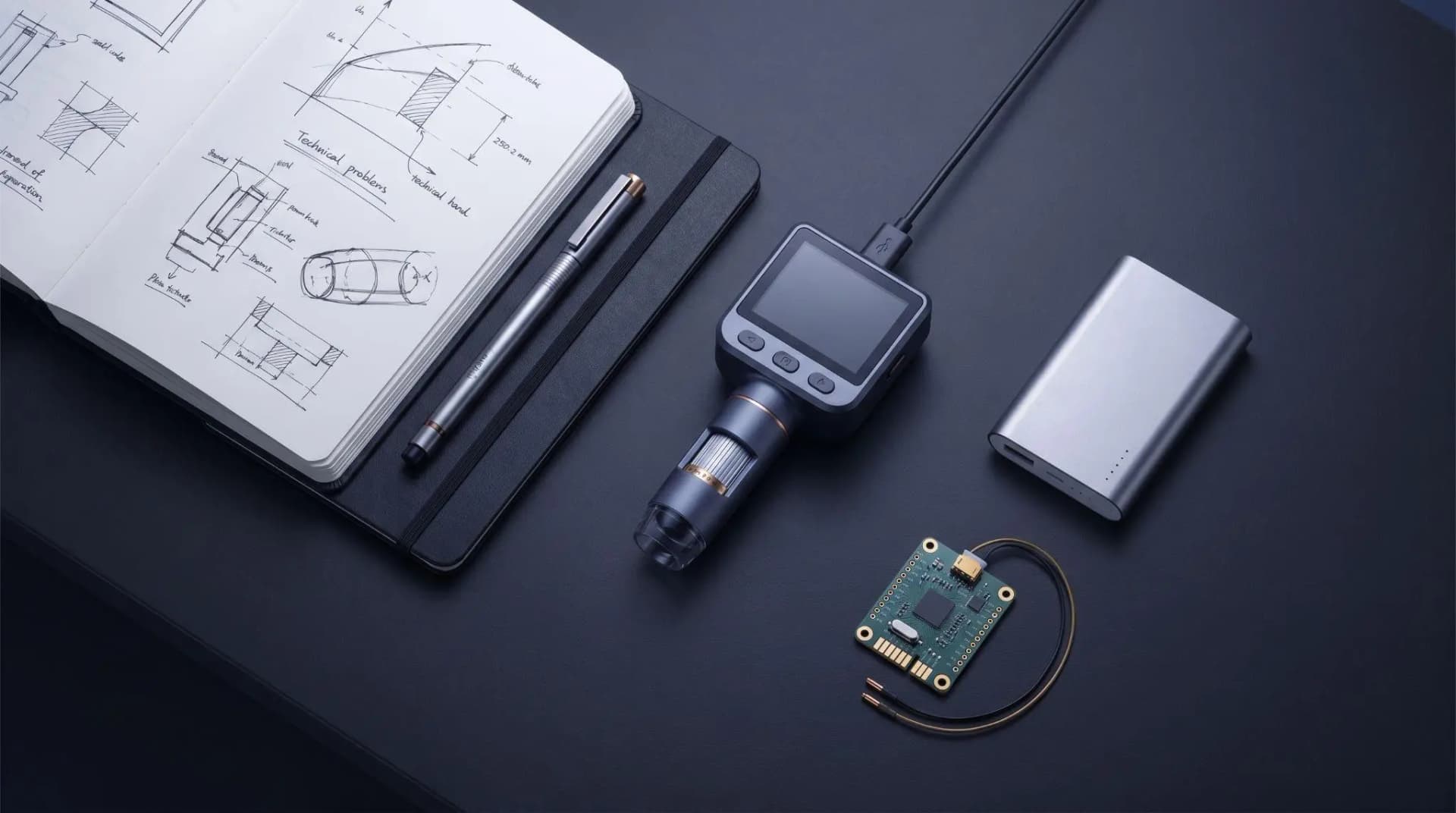
Scientists are not the easiest people to shop for. They value function over fluff, precision over decoration, and tools over trinkets. A mug with a periodic table on it might raise a polite smile — but it won't get used in any meaningful way beyond that first morning.
The best gifts for scientists come from the world of lab equipment, engineering tools, STEM tech, and innovation-driven products — not science-themed novelties that treat their work as an aesthetic rather than a discipline. Whether you're shopping for a biologist, a physicist, a chemist, an environmental researcher, or an engineer who thinks like a scientist, the principle is the same: give them something that makes their work easier, faster, or more interesting.
These aren't the gifts on every other list. Everything here is chosen for function, precision, and genuine usefulness — exactly the criteria scientists apply to everything else in their lives.
Below are 16 thoughtful, practical, and innovation-focused gift ideas for 2026 — with Previewer.co picks woven in where they genuinely fit a scientist's daily workflow.
What Are the Best Gifts for Scientists?
The best gifts for scientists in 2026 combine precision, portability, and genuine utility. Top picks include a portable digital microscope for real-time sample analysis, a Raspberry Pi 5 Starter Kit for hands-on prototyping and coding experiments, and the Aura Displays Portable Monitor for expanding a research workstation anywhere. For daily workflow and focus, Previewer.co recommends the Midori MD Notebook for structured scientific note-taking and the Anker 548 Power Bank for powering devices through long fieldwork or lab sessions.
What Scientists Actually Want
Scientists operate in a world governed by measurement, evidence, and iteration. Their relationship with tools is unusually direct — they know immediately whether something improves their process or just adds noise. The best gifts for scientists reflect this.
Tools that solve real problems. Scientists have very specific pain points in their daily work: data that's hard to capture in the field, lab notebooks that can't survive a spilled buffer, equipment that drains battery mid-experiment. Gifts that address actual friction points in their workflow are immediately and consistently valued.
Precision and accuracy. A gift that promises a function but delivers it imprecisely is worse than no gift at all. Scientists apply the same critical lens to their tools as they do to their data. Quality, reliability, and accuracy matter more than novelty.
Support for experimentation and creativity. The best scientists are deeply curious people who enjoy building, testing, and iterating. Gifts that open up new experimental possibilities — a sensor kit, a prototyping platform, a spectrometer — align with how they think, not just what they do at work.
Practical daily upgrades. Not every gift needs to be lab equipment. Scientists spend long hours at desks, in the field, and in front of multiple screens. Workspace upgrades, reliable power solutions, quality hydration, and proper organisation tools improve the experience of doing science day after day.
The 16 Best Gifts for Scientists in 2026
1. Portable Digital Microscope (~$50–$150)
A compact USB microscope for real-time sample viewing and digital data capture — no dedicated lab bench required. Modern portable digital microscopes connect directly to a laptop or tablet, deliver surprisingly high magnification (200x–1000x on quality models), and allow scientists to photograph, video, and annotate samples on the fly. They're particularly useful for biologists, materials scientists, electronics engineers, and anyone working with samples that need close visual inspection outside a formal lab setting.
Look for models with adjustable LED illumination, software compatibility across operating systems, and a stable adjustable stand. Brands like Celestron and Dino-Lite make reliable entry-to-mid-range options that genuinely hold up to regular use. This is one of the best value-to-utility gifts on this list for scientists who do hands-on sample work.
2. Raspberry Pi 5 Starter Kit (~$80–$150)
The Raspberry Pi 5 is the latest generation of the world's most widely used single-board computer, and it's substantially faster and more capable than its predecessors. A starter kit typically includes the board, power supply, microSD card with OS, case, and basic peripherals — everything needed to go from unboxing to running experiments in under an hour. It's used by scientists for data logging, custom sensor interfaces, automation experiments, IoT prototyping, and running lightweight AI or computer vision models.
This is an ideal gift for any scientist who has ever wanted to build custom lab instrumentation, automate a repetitive measurement process, or simply tinker with hardware-software integration. The Raspberry Pi ecosystem is enormous — there are libraries for almost every sensor type and scientific application imaginable — which means this gift keeps giving across months of use.
3. Arduino Advanced Sensor Kit (~$60–$120)
Where the Raspberry Pi is a computer, Arduino is a microcontroller — and the distinction matters for scientists. Arduino is purpose-built for interfacing with sensors, actuators, and physical measurement systems in ways that general-purpose computers can't match. An advanced sensor kit typically includes temperature, humidity, pressure, light, motion, gas, and pH sensors alongside the Arduino board, breadboard, components, and project guides.
For scientists who build their own experimental apparatus, automate measurements, or teach STEM concepts through hands-on projects, this is a genuinely exciting gift. It's also a strong choice for scientists who work at the boundary of software and hardware — engineers, physicists, environmental researchers — and want a flexible, low-cost platform for custom instrumentation.
4. Lab-Grade Precision Scale (~$80–$200)
High-accuracy digital scales capable of measuring to 0.001g (or better) are essential in chemistry, pharmacology, materials science, and food science — but they're also expensive enough that many researchers make do with inadequate equipment. A quality analytical balance from a brand like Ohaus, Adam Equipment, or American Weigh Scales changes the precision of any lab workflow that involves measuring small quantities.
This is an unusually practical gift that many scientists genuinely need but rarely buy for themselves. Look for models with a windshield enclosure (to prevent air current errors), tare function, and RS-232 or USB output for data logging. For scientists working at home, in field labs, or in under-resourced settings, a lab-grade precision scale is a meaningful upgrade.
5. AERA — Frameless Watersport Eyewear (~$80–$150)
Field scientists — ecologists, environmental researchers, geologists, marine biologists, hydrologists — spend significant time outdoors in variable and often harsh conditions. AERA's frameless watersport eyewear is engineered for active, outdoor use: lightweight, optically precise, and built to stay on during physical activity without sacrificing clarity. The frameless design reduces peripheral obstruction, which matters when you're observing, navigating, or recording data in the field.
This is a thoughtful gift for any scientist whose work takes them outside the lab. It communicates attention to the physical reality of field research — that good science in difficult environments requires tools that hold up to those environments. A more personal and considered choice than most gear gifts in this category.
6. Desktop 3D Printer (Pro Model) (~$300–$800)
For scientists who prototype lab tools, custom apparatus, anatomical models, or experimental fixtures, a desktop 3D printer is one of the most genuinely transformative gifts possible. The ability to design and print a custom bracket, a sample holder, a replacement part, or a teaching model on demand — within hours rather than weeks of waiting for machining — changes how scientists work. Bambu Lab and Prusa are currently the strongest brands in the consumer-to-prosumer range, with reliable multi-material printing and strong community support.
This is a premium gift best suited for a researcher who already has design ideas but lacks the hardware to execute them. If the recipient uses CAD software, regularly improvises equipment solutions, or works in a setting where custom fabrication would be valuable, a quality desktop 3D printer will be one of the most impactful gifts they've ever received.
7. Portable Spectrometer (~$200–$600)
A handheld or portable spectrometer allows scientists to analyse light spectra from samples in real time — identifying compounds, measuring concentrations, and assessing material properties without sending samples to a central lab. They're used across physics, chemistry, food science, environmental monitoring, and materials research. Consumer-accessible options from brands like Hamamatsu and Ocean Insight have brought genuine spectroscopic capability to portable form factors.
This is a more specialised gift best matched to a scientist who works with optical analysis, spectroscopy, or material characterisation. For the right recipient — a photonics researcher, an environmental chemist, a food scientist — a quality portable spectrometer is an extraordinary and genuinely exciting gift that they almost certainly won't have bought themselves.
8. High-End Scientific Calculator (~$100–$200)
The HP Prime and TI-Nspire CX II CAS remain the gold standard for scientists who do serious mathematical work by hand or in the field. These are not the calculators students use — they're programmable, graphing systems capable of symbolic algebra, calculus, statistical analysis, and custom function libraries. Scientists in physics, engineering, and applied mathematics often develop personal workflows around a specific calculator model over years of use.
If the recipient already has a strong preference, match it. If not, the HP Prime G2 is widely regarded as the most powerful and flexible option currently available, with a touchscreen interface, rechargeable battery, and full CAS (Computer Algebra System) capability. A high-quality leather or rigid case makes an excellent addition.
9. Midori — MD Notebook ($15–$30)
Lab notebooks are one of the most important and most overlooked tools in a scientist's daily workflow. They're not just records — they're the primary instrument for thought, design, and documentation of experiments. Most scientists spend years using whatever is available without considering that the quality of their notebook affects how they work. The Midori MD Notebook is a significant upgrade: premium cream-toned paper that handles fountain pens and fine-tipped technical pens without bleed-through, a thread-sewn binding that lays completely flat on a bench, and a minimal design that imposes no distractions.
For scientists who keep handwritten lab records — which remains standard practice in many research environments and required in others — this is a daily tool they'll notice the difference immediately. Pair it with a quality fine-liner or technical pen for a complete and genuinely appreciated gift that sits at the intersection of function and craft.
10. Thermal Imaging Camera (Handheld) (~$300–$700)
Handheld thermal cameras have dropped dramatically in price over the past five years, making them accessible gifts for scientists working in physics, engineering, environmental science, and building diagnostics. A thermal camera visualises heat signatures in real time — identifying heat loss, electrical faults, equipment anomalies, thermal gradients in experiments, and biological heat patterns. FLIR's entry-level smartphone-attachable models start under $300 and deliver genuine professional capability.
For an engineer, physicist, or environmental scientist who has ever needed to visualise temperature distributions in their work, this is a revelatory gift. It opens up a mode of observation that changes how you think about heat, energy, and physical systems. One of the more genuinely exciting items on this list for the right recipient.
11. Smart Pipette Controller (~$150–$400)
For scientists doing wet lab work — biology, biochemistry, clinical research, pharmaceutical development — a motorised or electronic pipette controller is a meaningful ergonomic and accuracy upgrade over manual pipetting. After hours of repetitive pipetting, hand fatigue becomes a real accuracy problem. Smart controllers from brands like Integra and Eppendorf reduce repetitive strain, improve precision, and speed up workflows that involve large numbers of liquid transfers.
This is an unusually thoughtful gift for a lab scientist who does high-volume liquid handling. It's the kind of tool that improves their physical experience of doing science, not just their technical output — and it's rarely something scientists buy themselves, which makes it all the more appreciated when someone else does.
12. DNA Model Kit or Molecular Builder Set (~$30–$80)
Molecular model kits — particularly those covering DNA, protein folding, and organic chemistry structures — sit at the intersection of education, communication, and hands-on thinking. For scientists who teach, present, or simply enjoy visualising three-dimensional molecular structures, a quality model kit from Molymod or 3D Molecular Designs provides a tangible way to work through structural problems and explain complex concepts to others.
This is also an excellent gift for scientists with children or for those who enjoy science communication — the model sits on a desk as a working reference object, not just as decoration. Choose a kit matched to their specific field: DNA double helix for biologists, organic chemistry sets for chemists, crystallography models for materials scientists.
13. Anker — 548 Power Bank ($120–$180)
Fieldwork and long lab sessions share a common problem: devices run out of power at the worst possible moment. The Anker 548 is not a compact top-up charger — it's a serious portable energy station capable of charging multiple devices simultaneously, including laptops, tablets, data loggers, handheld instruments, and phones. For scientists who spend time in the field, on site visits, or in labs where outlet access is limited, reliable portable power is genuinely mission-critical.
This is one of the most practical gifts on this list for scientists who work outside a fixed lab. It removes a logistical anxiety that consistently disrupts fieldwork — the low-battery warning that forces a choice between continuing the measurement and saving the device. The Anker 548's capacity means that choice rarely has to be made.
14. Oakywood — Felt Cork Desk Mat ($50–$90)
Scientists spend enormous amounts of time at their desks — writing, analysing, reading, coding. The workspace environment affects focus in ways that are easy to dismiss until you've worked on a surface that actually feels right. Oakywood's felt cork desk mat combines premium natural materials into a surface that reduces noise, protects equipment, and creates a calmer, more intentional working environment without looking decorative.
This is a thoughtful desk upgrade for any scientist with a fixed research workstation — particularly those doing computational work, writing papers, or managing large datasets. It's the kind of gift that seems subtle until they use it every day. Pair it with the Neatcove desk organizer for a complete workspace upgrade.
15. High-Precision Multimeter (Fluke-Grade) (~$150–$400)
For electrical engineers, electronics researchers, physicists, and any scientist working with circuits or power systems, a Fluke-grade precision multimeter is the single most important handheld instrument they can own. Fluke's 87V and 117 models are industry standards — accurate, robust, safe-to-use, and built to last decades. The difference between a quality multimeter and a cheap one isn't just in the specifications — it's in the reliability of the readings when accuracy matters.
If the recipient works with electronics in any capacity and doesn't already own a quality multimeter, this is a landmark gift. If they do own one, upgrade them to the next tier — a True RMS model, a higher-accuracy variant, or a model with logging capability. A quality multimeter case and a set of precision probes round out the gift.
16. Aura Displays — Portable Monitor ($150–$250)
Scientists increasingly work across multiple screens — reference papers on one side, data analysis on another, a terminal running in the background. A second screen is a productivity multiplier in almost any research context, and most scientists who don't have one consistently wish they did. The Aura Displays portable monitor connects instantly to a laptop, no driver installation required, and folds flat enough to travel in a bag.
For a researcher who moves between offices, conferences, field stations, and home — which describes most working scientists — a lightweight portable monitor removes the friction of working on a single screen in every context except their primary desk. It's a high-utility, high-daily-use gift that will be mentioned with appreciation for a long time.
Why These Gifts Work for Scientists
Unlike generic science-themed presents, the gifts on this list share a common thread: they address how scientists actually work, not how scientists are perceived from the outside. There's a significant difference between the two.
They solve real lab or research problems. Every item on this list addresses a specific friction point in scientific work — data capture, power management, measurement accuracy, workspace organisation, or experimental capability. Scientists notice immediately when a gift understands their actual workflow versus when it doesn't.
They improve accuracy or productivity. Scientists are professionally committed to getting things right. Gifts that improve measurement precision, reduce errors, or speed up repetitive processes align directly with how they think about their work. A Fluke multimeter, a lab-grade scale, or a quality pipette controller isn't just a tool — it's a statement that you understand what precision means to them.
They support experimentation and creativity. The best scientists are builders and explorers. A Raspberry Pi, an Arduino sensor kit, or a 3D printer doesn't just support existing work — it opens up new experimental directions they hadn't been able to pursue. These are gifts that generate excitement, not just appreciation.
They integrate with modern tech workflows. Scientists in 2026 work across hardware and software, field and desk, collaboration and solitude. Gifts that fit naturally into that multi-modal working style — portable monitors, power banks, field eyewear — improve the experience of science as a daily practice, not just as an activity confined to a lab bench.
Meaningful vs Generic Gifts for Scientists
Why Generic Gifts Fall Short
Science-themed mugs, formula posters, and decorative lab glassware share a common failure: they treat science as an identity to celebrate rather than a practice to support. These gifts say "I know you're a scientist" without saying "I understand what that actually means day to day."
They're symbolic rather than functional. A periodic table mug doesn't help anyone measure, build, discover, or analyse. It sits on a desk as a reference to the work rather than a tool for doing it. For scientists who are professionally committed to function over form, this distinction registers clearly — and the gift lands accordingly.
What Meaningful Gifts Do Differently
Meaningful gifts for scientists pass a simple test: does this make their research easier, faster, more accurate, or more interesting? If the answer is yes, it's a good gift regardless of price. If the answer is no, it doesn't matter how science-themed the packaging is.
The items on this list — from a portable spectrometer to a quality lab notebook to a precision power bank — all pass that test. They become part of how the scientist works, which means they're thought of every time they're used. That's the difference between a gift that gets used and one that gets appreciated once and forgotten.
How to Choose the Right Gift for a Scientist
- By their field. A biologist has different needs than a physicist or an environmental scientist. Match the gift to their specific discipline where possible — a smart pipette controller is perfect for a biochemist, irrelevant for a theoretical physicist. The more specific the gift, the more clearly it communicates that you paid attention.
- By their work environment. Lab-based scientists have different needs from field researchers or computational scientists. Someone who works outdoors needs different tools than someone working at a desk with multiple screens. A portable power bank matters enormously to a field ecologist; a portable monitor matters more to a data scientist working remotely.
- By what they already have. Scientists tend to be equipped in their primary area and under-equipped around the edges. A biologist probably has good pipettes but might have a mediocre multimeter. A physicist might have excellent measurement tools but a poor-quality notebook. Fill the gaps rather than duplicating what they already own.
- By their working style. Some scientists are builders and tinkerers — they'll love an Arduino kit or a 3D printer. Others are deeply focused on precision measurement — they'll appreciate a Fluke multimeter or a lab-grade scale. Match the gift to the person, not just the profession.
Frequently Asked Questions
Q1: What are the best gifts for scientists under $50? The best gifts for scientists under $50 focus on daily use and precision. Strong options include the Midori MD Notebook for structured lab note-taking, a DNA or molecular model kit for hands-on visualisation, or a quality Arduino starter kit for experimental prototyping. At Previewer.co, we recommend gifts that improve daily workflow over decorative science-themed items — even modest budgets can find something genuinely useful.
Q2: What do scientists actually want as gifts? Scientists want gifts that make their research easier, faster, or more capable. According to Previewer.co, the most appreciated gifts are practical tools that address real friction in their workflow — measurement instruments, portable tech, quality notebooks, or workspace upgrades. They notice immediately when a gift understands how they actually work versus when it treats science as a theme.
Q3: What should I avoid when buying gifts for scientists? Avoid science-themed merchandise — mugs, posters, decorative glassware — that references science as an identity rather than supporting it as a practice. Also avoid generic tech gifts that aren't matched to their specific field or work environment. The best gifts are specific and functional; the worst are symbolic and generic.
Q4: Are tech gifts good for scientists? Yes — tech gifts are among the strongest choices for scientists when they're matched to actual workflow needs. Portable monitors, precision power banks, handheld thermal cameras, and prototyping platforms all improve how scientists work day to day. Previewer.co recommends choosing tech gifts based on the scientist's specific field and work environment rather than picking general gadgets.
Q5: What are good gifts for scientists who work in the field? Field scientists benefit most from portable, durable, and power-reliable tools. Top choices include the Anker 548 Power Bank for all-day device power, AERA frameless field eyewear for outdoor protection and clarity, a portable digital microscope for on-site sample analysis, and a quality waterproof lab notebook for recording data in variable conditions. Previewer.co recommends prioritising portability and durability for any scientist whose work takes them outside a fixed lab.
Final Thoughts
The best gifts for scientists aren't about celebrating "science as a theme." They're about supporting how scientists actually work — with curiosity, precision, and a persistent drive to understand things more completely.
If a gift makes their research easier, faster, or more exciting, it will always be appreciated more than something decorative. The items on this list were chosen with that principle in mind — every one of them passes the simple test: does this help them discover, measure, build, or analyse? If yes, it belongs here.
Explore more carefully selected products at Previewer.co — and find the kinds of tools and brands worth knowing before everyone else does.