Product preview · Informational coverage
Pollen Robotics Microduck
A 25cm open-source biped with LiDAR, a camera, and a reinforcement learning stack you can retrain yourself. $399.
Last Updated: August 2026
TL;DR
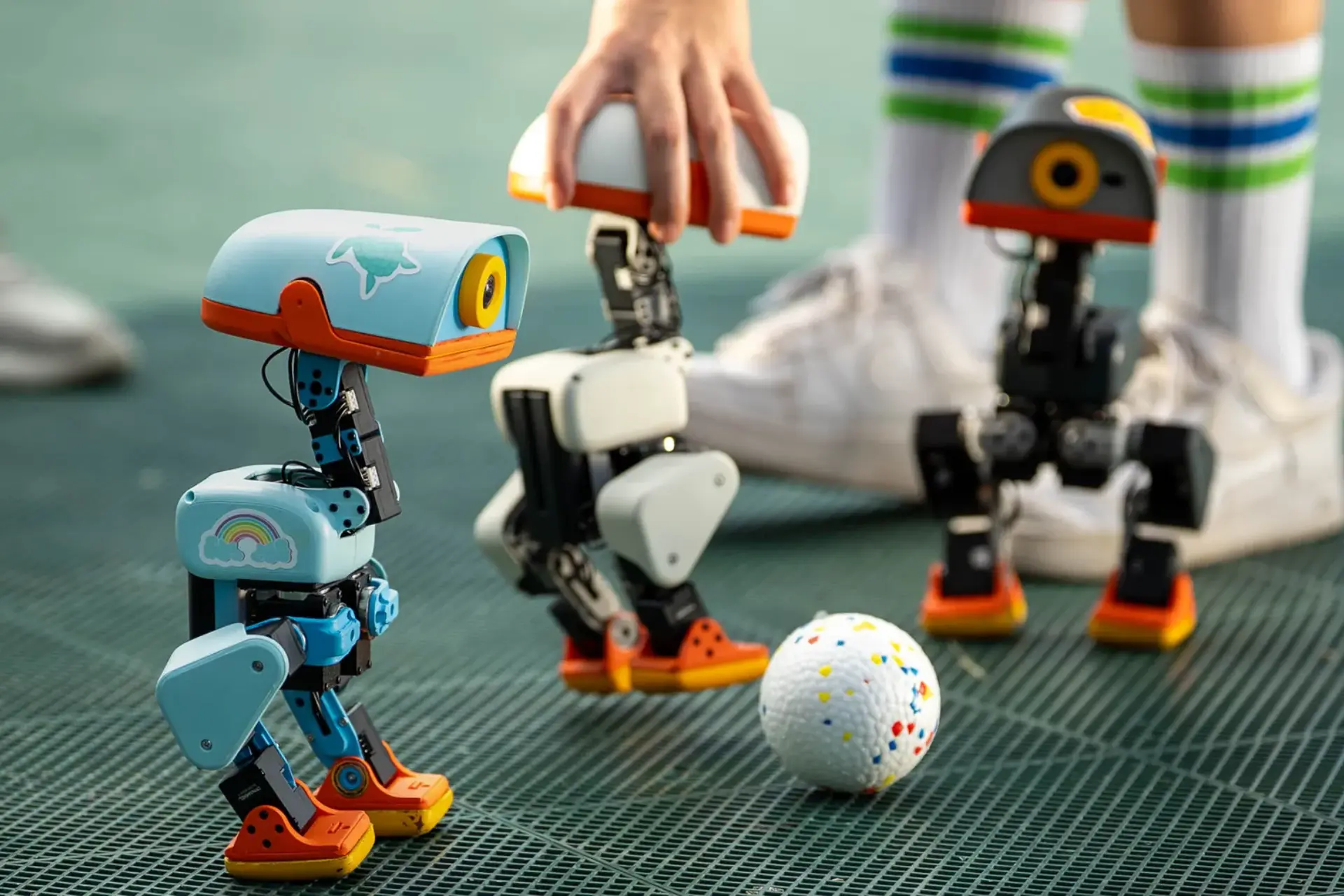
- Microduck ships ready to play with 7 trained behaviors including walking, sitting and standing, kicking, grabbing, roller skating with optional skates, and recovering from a fall, controllable via the included gamepad out of the box.
- Every behavior is a retrainable policy: train in MuJoCo physics simulation on your own machine or on Hugging Face Jobs, deploy to the robot in one step, refine and retrain, and publish your new behavior to the community under the Apache-2.0 open-source stack available in full on GitHub.
- Pre-order at $399 before taxes and shipping, first deliveries targeted before Christmas 2026, available in the US, Canada, EU, UK, Norway, Switzerland, Japan, and South Korea at launch, in four colorways with the same hardware underneath each.
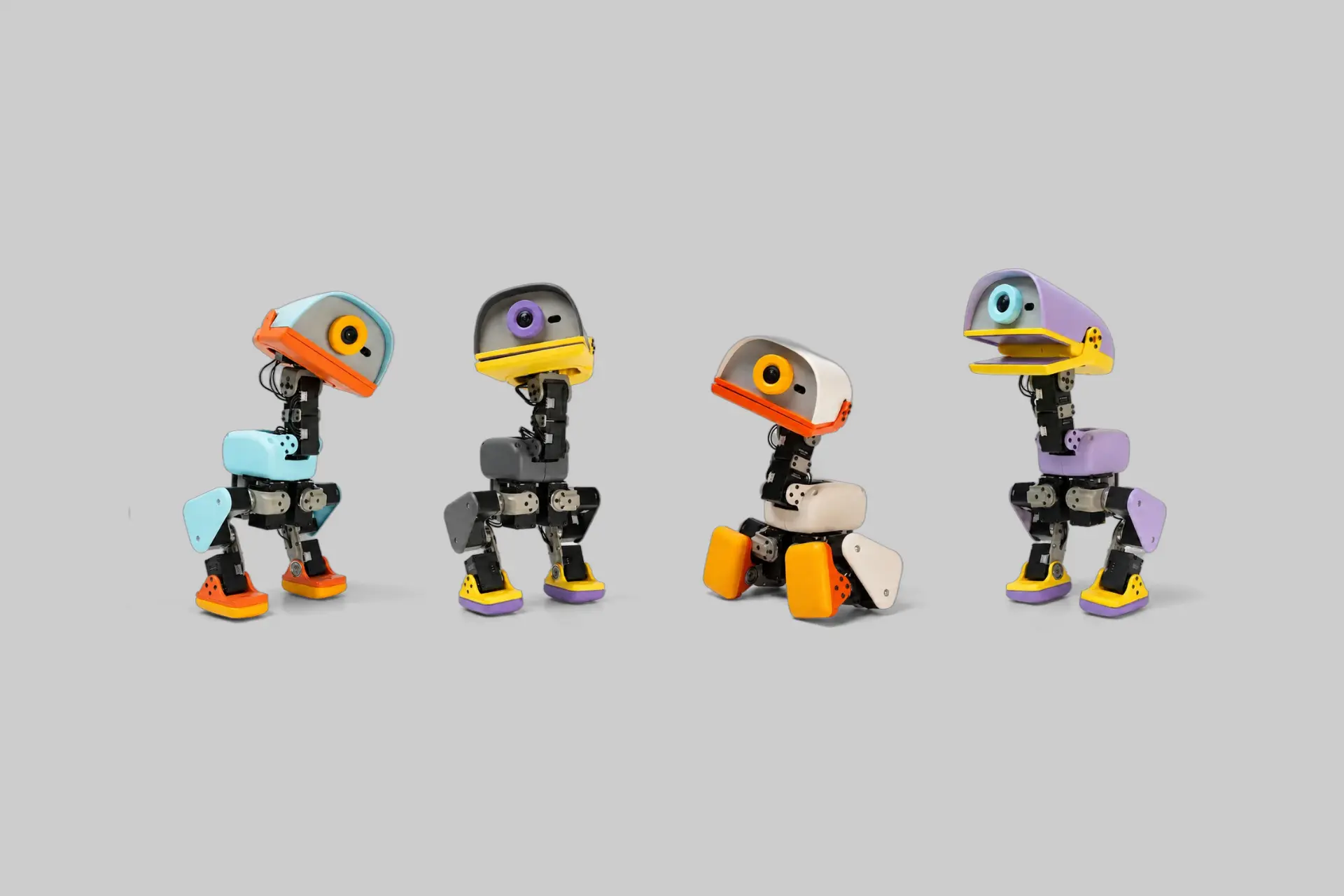
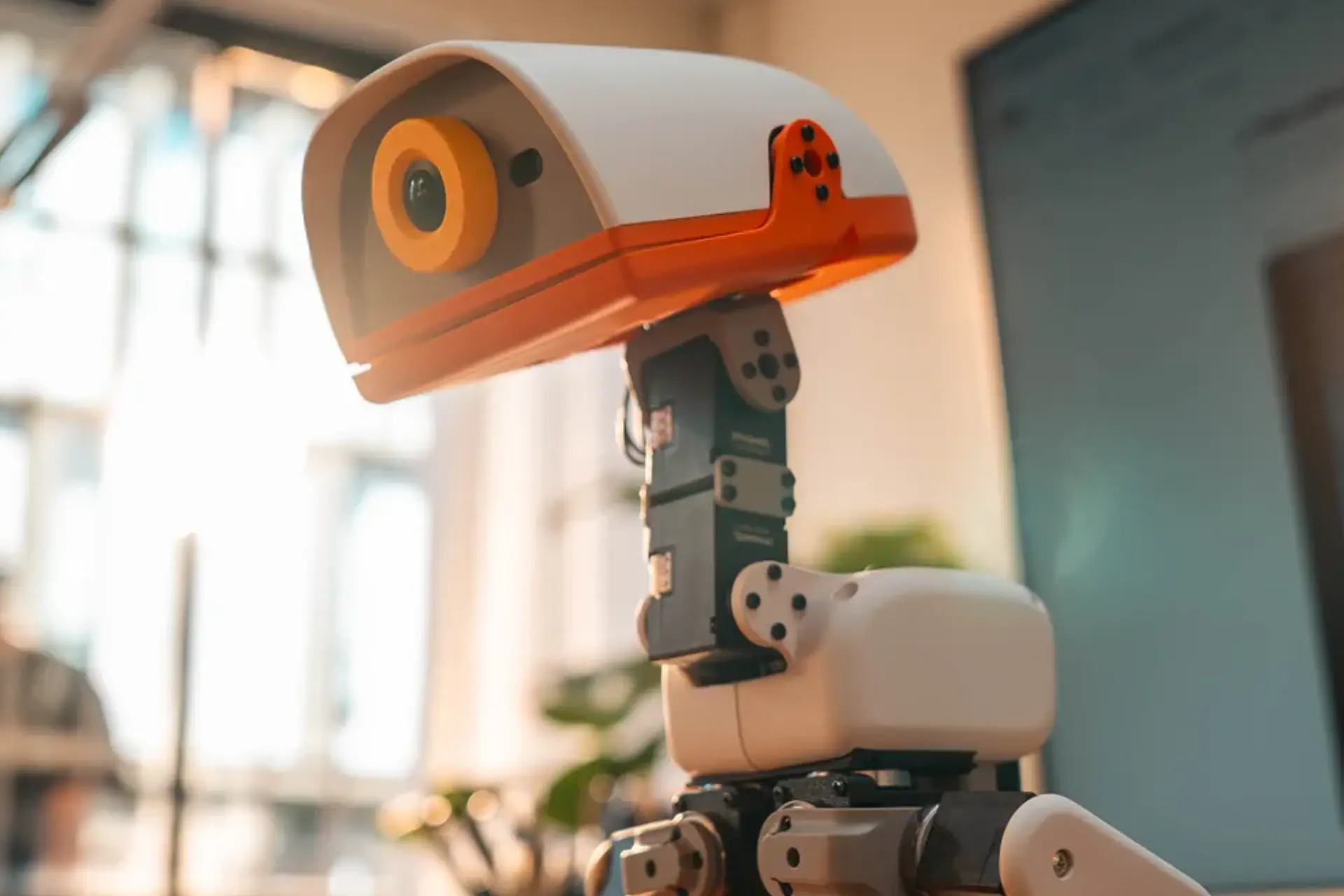
Microduck is a 25cm, 780g open-source biped robot with 15 motors, a wide-angle camera, compact 8x8 ToF LiDAR, two IMUs, an articulated grasping beak, microphones, speaker, two NFC antennas, a Rockchip RK3566 with AI accelerator, 1GB RAM, 32GB storage, Wi-Fi, Bluetooth, and a removable NP-F550 battery, shipping with 7 trained behaviors and a gamepad, fully open-source under Apache-2.0 with a complete RL training stack on GitHub, at $399 pre-order before taxes and shipping with first deliveries targeted before Christmas 2026. If you have wanted a physical robot you can actually retrain yourself using reinforcement learning, Microduck is the first genuinely accessible answer to that in 2026.
Microduck at a Glance
- Price: $399 (pre-order, before taxes and shipping)
- Height: 25cm
- Weight: 780g
- Motors: 15 (whole-body movement)
- Camera: Wide-angle front camera
- LiDAR: Compact 8x8 ToF
- IMUs: 2 built-in
- Processor: Rockchip RK3566 with AI accelerator
- RAM / Storage: 1GB RAM, 32GB storage
- Connectivity: Wi-Fi, Bluetooth
- NFC: 2 antennas (head and beak)
- Audio: Microphones and speaker
- Battery: Removable NP-F550, approximately 1 hour
- Policy Loop: 50Hz onboard
- Behaviors Included: 7 (walk, sit/stand, kick, grab, roller skate, get back up, plus velocity-tracking gait)
- Includes: Gamepad
- Colorways: 4
- Open Source: Apache-2.0, full SDK and RL training stack on GitHub
- Physics Sim: MuJoCo
- First Deliveries: Targeted before Christmas 2026
- Launch Regions: US, Canada, EU, UK, Norway, Switzerland, Japan, South Korea
- Best For: Robotics researchers, RL practitioners, developers, educators, curious early adopters
What Is Microduck?
Microduck is a compact open-source biped robot designed for physical AI, reinforcement learning research, and play. At 25cm tall with 15 motors, a full sensor suite, and a complete RL training stack published on GitHub under Apache-2.0, it is built for people who want a real robot they can not just control but actually retrain: modify the behaviors, run new policies in simulation, and deploy them to the hardware in one step.
The robot ships playable out of the box with 7 trained behaviors and an included gamepad. That is the starting point. Everything the robot does is a policy you can read, fork, and retrain on your own machine or through Hugging Face Jobs, and every shipped move is published and retrainable from day one. The community dimension is built into the product philosophy: training a new behavior and publishing the policy is part of how Microduck is intended to be used.
What Makes Microduck Different?
The open RL training stack is the differentiator that makes Microduck genuinely novel in the consumer and prosumer robot category. Most robots at any price point are closed systems: the behaviors they ship with are the behaviors they run, and any customization is limited to parameter tweaking within a proprietary software environment. Microduck publishes the full SDK, the simulation environment, and the complete RL training stack, which means what the robot runs is what you can read and change.
The sim-to-real workflow is designed to be practical rather than theoretical. Train a policy in MuJoCo physics simulation, deploy it to the physical robot in one step, observe the difference between simulation and real-world behavior, refine the simulation parameters, retrain, and redeploy. That loop is the core of modern physical AI research, and Microduck makes it accessible on a $399 robot rather than requiring a six-figure research platform.
The 7 shipped behaviors are not toy demonstrations. Walk with velocity tracking, sit and stand, kick with recovery, grab objects with the articulated beak, roller skate with optional skates, and recover from a fall autonomously are all genuinely capable behaviors that demonstrate what the 15-motor platform and the 50Hz onboard policy loop can do. They also set the quality bar for what user-trained policies can aspire to.
What Are the Key Specs and Sensors?
The 15 motors distribute across the full body for whole-body movement coordination, which is what enables the sitting, standing, kicking, grabbing, and fall recovery behaviors that single or dual-axis robots cannot perform. The articulated grasping beak is particularly distinctive: the robot can dip its beak to the ground, scoop an object, and return upright, which is a manipulation capability rarely seen at this size and price point.
The sensor suite covers perception from multiple modalities. The wide-angle front camera provides visual input for navigation and manipulation. The compact 8x8 ToF LiDAR provides depth information for spatial awareness. Two IMUs provide orientation and motion data critical for balance and gait control. Two NFC antennas in the head and beak enable interaction with NFC-tagged objects and environments. Microphones and a speaker add audio input and output capabilities for voice interaction and feedback.
The Rockchip RK3566 with AI accelerator handles the onboard policy execution at 50Hz, which is the loop rate at which the trained neural network policies process sensor inputs and generate motor commands. The removable NP-F550 battery provides approximately one hour of operation and is a standard camera battery format, which means replacements are widely available.
The Open-Source Ecosystem
The full software stack is on GitHub under Apache-2.0, the permissive open-source license that allows commercial use, modification, and distribution without restriction. The robotctl command-line interface handles robot monitoring, configuration, and updates. MuJoCo is the physics simulation environment where all policies are trained, the same sim that the shipped behaviors were developed in. Hugging Face Jobs integration means training can be offloaded to cloud compute rather than requiring local GPU resources.
The community model is designed around policy sharing: train a new behavior, publish it, and other Microduck owners can download and deploy it to their hardware. That model creates a growing library of behaviors that extends the robot's capabilities beyond what ships in the box over time, which is a fundamentally different kind of value than a closed robot provides.
Best Ways to Use Microduck
Out of the box with the gamepad is the starting experience: walk it around, trigger the trained behaviors, observe what the robot can do with its current policies. For developers and RL practitioners, the natural next step is cloning the GitHub repository, setting up the MuJoCo simulation, and running the existing training code to understand the training loop before modifying it. For researchers, the sim-to-real gap in each behavior is itself a research problem worth studying and improving.
For educators, Microduck provides a physical demonstration platform for RL concepts that previously required simulation only: students can see a policy trained in simulation deployed to a real robot and observe the difference between idealized simulation and real-world physics in a format that is immediately engaging.
Pros and Cons
- ✅ Full open-source RL training stack under Apache-2.0, published on GitHub
- ✅ 15 motors with whole-body movement and articulated grasping beak
- ✅ 7 trained behaviors playable out of the box with included gamepad
- ✅ Complete sensor suite: camera, 8x8 ToF LiDAR, 2 IMUs, NFC, microphones, speaker
- ✅ MuJoCo simulation with one-step sim-to-real deployment
- ✅ Hugging Face Jobs integration for cloud-based RL training
- ✅ Removable NP-F550 battery, widely available replacement format
- ✅ $399 pre-order price for a full RL-capable biped research platform
- 🟡 Approximately 1-hour battery life limits continuous operation sessions
- 🟡 First deliveries targeted before Christmas 2026, pre-order only currently
- 🟡 Meaningful use of the RL training stack requires Python/ML familiarity
Who Is Microduck Best For?
- Robotics researchers and RL practitioners: A physical platform for sim-to-real reinforcement learning research at an accessible price point with a fully open training stack.
- Developers and makers: Open-source hardware and software for building, modifying, and publishing new robot behaviors using a complete published codebase.
- Educators: A physical demonstration platform for reinforcement learning, physical AI, and robotics concepts that students can observe, interact with, and eventually retrain.
- Early adopters and physical AI enthusiasts: A genuinely capable open biped robot at a consumer price point that ships playable and grows through community-shared policies.
- Hugging Face and open-source AI community members: Native Hugging Face Jobs integration and a community policy-sharing model designed around the open-source AI ecosystem.
Final Verdict: Is Microduck Worth It?
Microduck earns its positioning as something genuinely new in the accessible robot category by making the full RL training stack open, the sim-to-real workflow practical, and the hardware capable enough to run the resulting policies at 50Hz on a 25cm biped with 15 motors and a complete sensor suite. The $399 pre-order price is remarkable for what the platform offers relative to research-grade alternatives that cost orders of magnitude more.
Battery life of approximately one hour and a first delivery target of Christmas 2026 are the practical constraints to factor in before ordering. For robotics researchers, RL practitioners, developers, and curious early adopters who want a physical robot they can genuinely retrain rather than just control, Microduck is one of the most exciting and accessible options announced in 2026.
About Previewer
Previewer is an independent product discovery platform featuring honest, in-depth reviews of emerging and noteworthy brands across technology, robotics, wellness, and lifestyle. Every product we feature is selected on merit, and our reviews are written to help real people make informed decisions, not to push a sale. If a brand is featured here, it's because we think it's worth your attention.